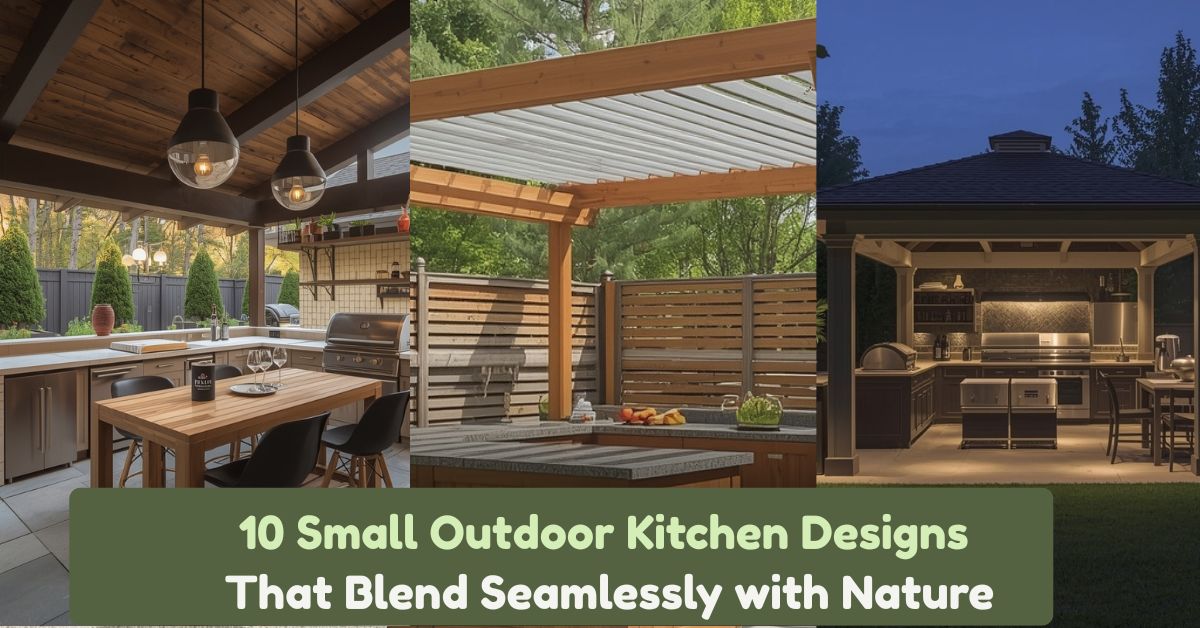
Outdoor cooking spaces are no longer reserved for large backyards or luxury villas. In many homes across T1 countries, small outdoor kitchens have quietly become extensions of everyday living. They offer a slower rhythm, where cooking happens alongside fresh air, natural light, and gentle surroundings rather than enclosed walls. This shift reflects a deeper desire for spaces that feel grounded, practical, and emotionally calming.
Small Outdoor Kitchen Designs focus less on size and more on harmony. When thoughtfully planned, even the most compact outdoor setup can feel effortless and connected to nature. Using natural materials, restrained layouts, and simple functionality allows these kitchens to blend into gardens, patios, or terraces without drawing unnecessary attention. This article explores Small Outdoor Kitchen Designs that feel intentional, calm, and timeless, helping you create an outdoor cooking space that supports daily life rather than competing with it.
10 Small Outdoor Kitchen Designs That Blend Seamlessly with Nature
Table of Contents
1. Open Layouts That Respect Natural Flow
Small Outdoor Kitchen Designs work best when they follow the natural movement of the space rather than forcing rigid boundaries. An open layout allows the kitchen to sit gently within its surroundings, whether it’s a garden corner, balcony edge, or patio wall. Instead of enclosing the area, leaving visual gaps helps maintain a connection with greenery, sky, and light.
In many T1 homes, this approach keeps outdoor kitchens from feeling cramped. The cooking area feels like part of the landscape rather than a separate structure. Open layouts also improve ventilation and make small spaces feel larger, encouraging relaxed cooking without visual pressure.
2. Natural Materials That Age Gracefully
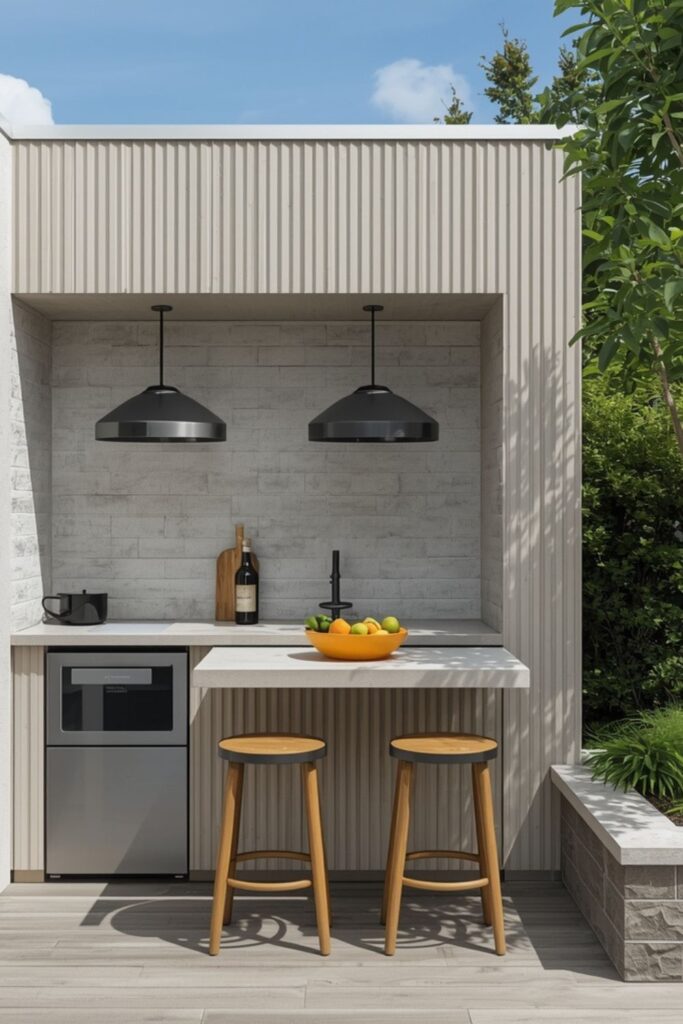
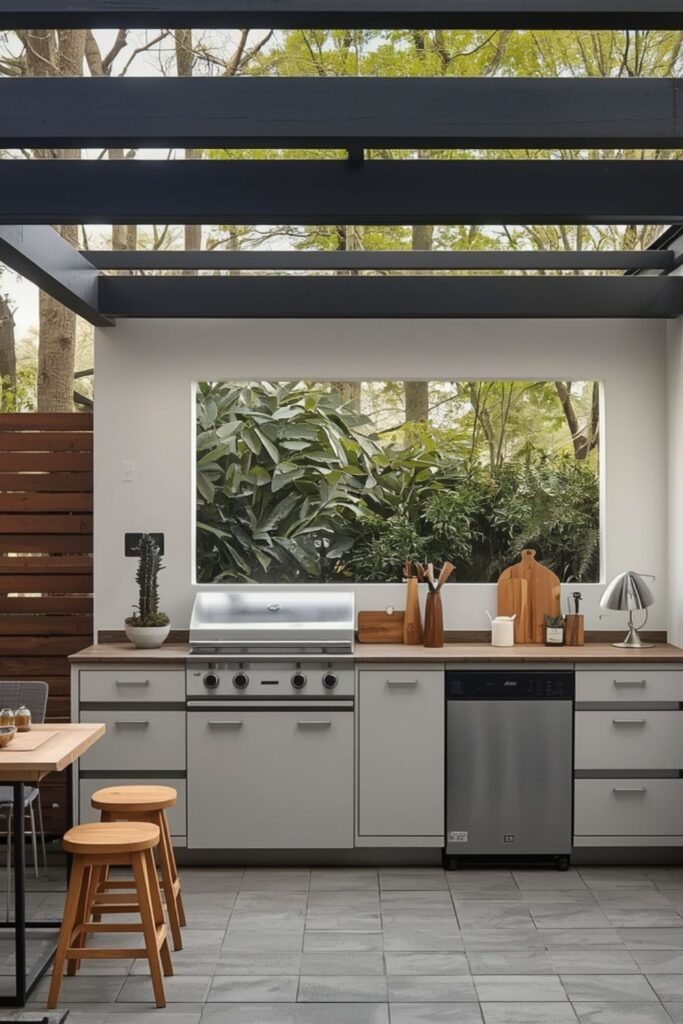
Material choice defines how well Small Outdoor Kitchen Designs blend with nature. Stone countertops, unfinished wood, concrete surfaces, and matte metals develop character over time rather than showing wear. These materials mirror outdoor textures, making the kitchen feel settled rather than imposed.
Using materials that weather naturally helps the space feel authentic. Instead of trying to protect every surface, allowing subtle aging creates warmth and depth. This approach suits outdoor kitchens under budget as well, since natural finishes often require less maintenance and remain visually calm across seasons.
3. Compact Layouts Designed Around Real Use
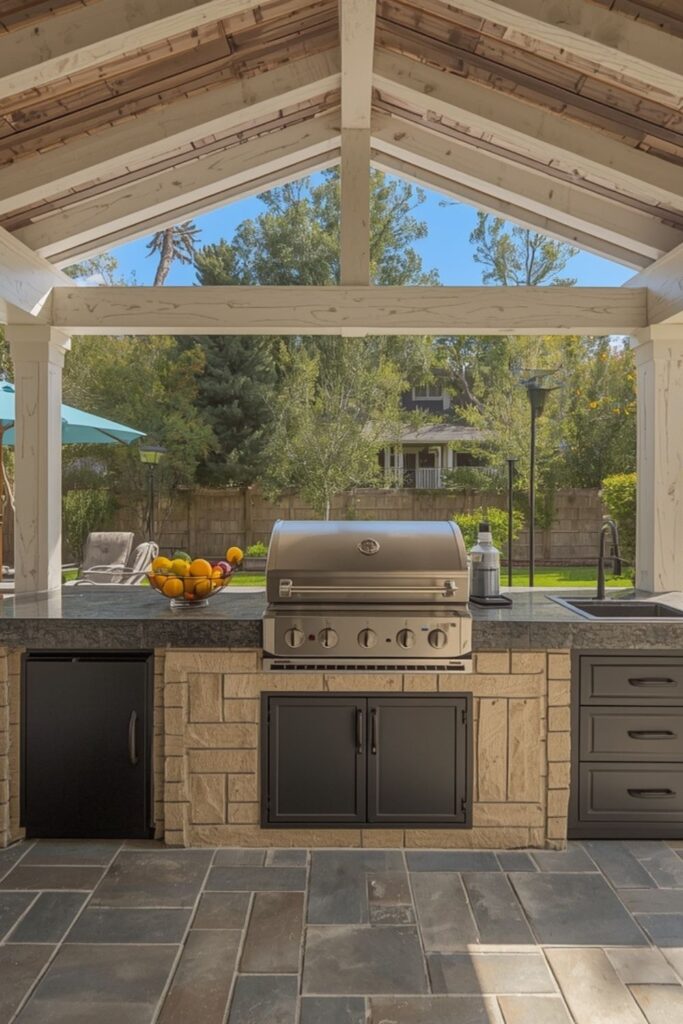
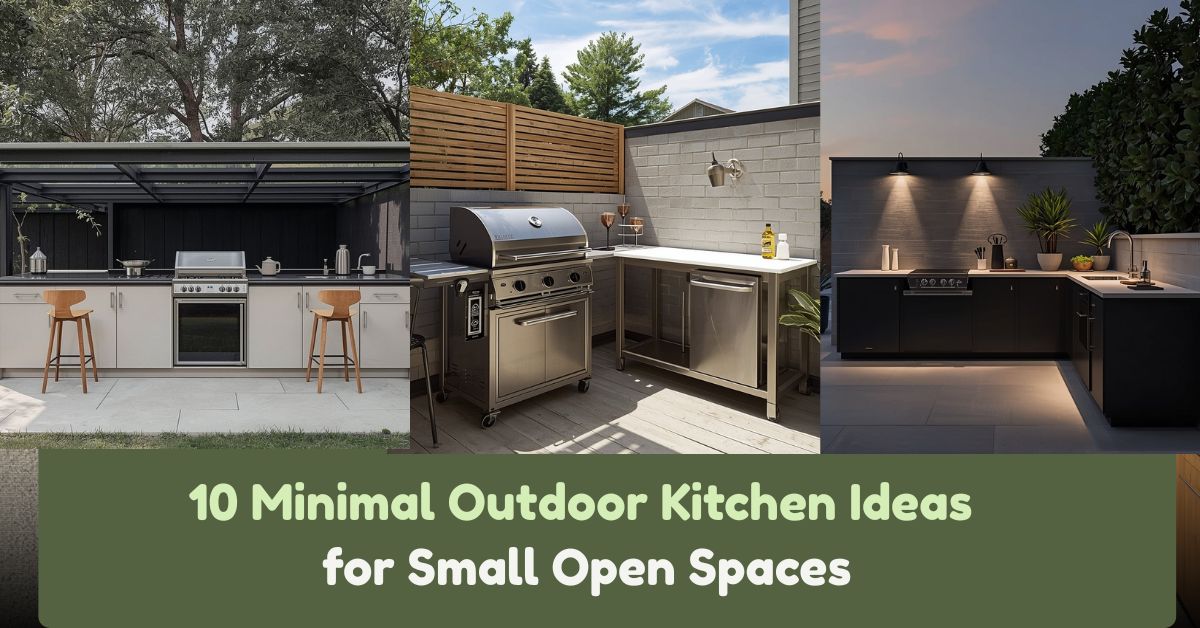
A small outdoor kitchen becomes functional when it focuses on actual cooking habits rather than oversized features. A single counter with a built-in grill, a compact sink, and minimal prep space often meets daily needs more effectively than elaborate setups.
Small Outdoor Kitchen Designs benefit from close proximity between cooking zones. When everything is within easy reach, movement feels intuitive and relaxed. This simplicity supports both DIY builds and professionally planned layouts, especially in small covered outdoor kitchens where space is limited but usage remains frequent.
4. Soft Roofing That Provides Shelter Without Enclosure
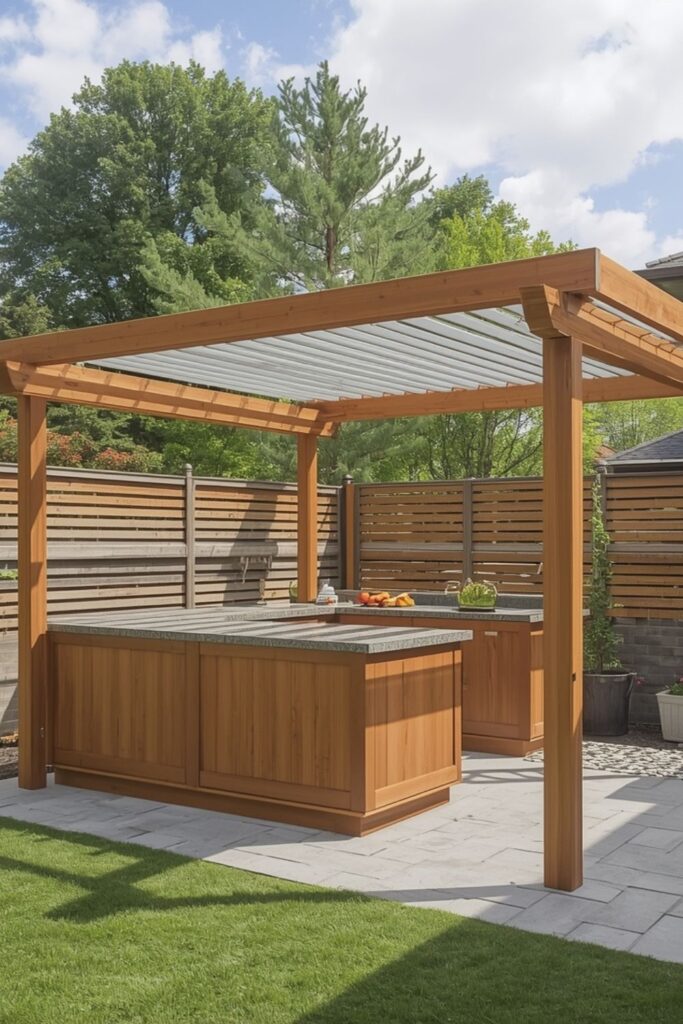
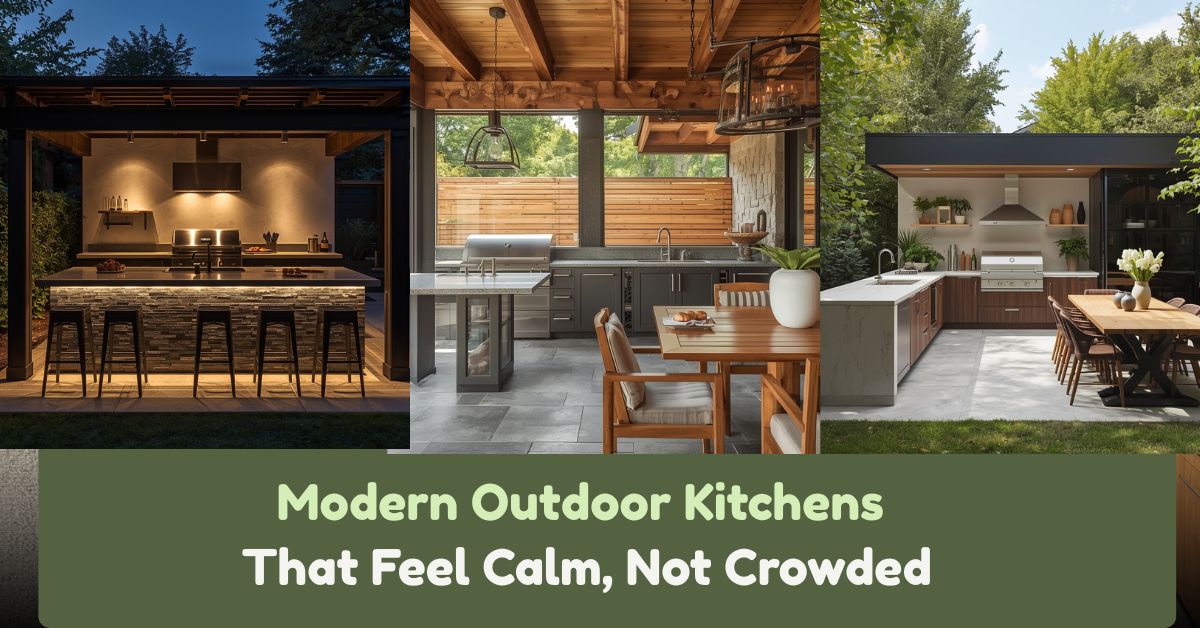
Adding a roof to a small outdoor kitchen does not mean closing it off from nature. Light pergolas, wooden slats, or translucent panels offer protection from sun and rain while preserving openness. These roofing solutions allow filtered light and airflow, maintaining the outdoor atmosphere.
Small outdoor kitchens with roof structures feel usable year-round in many climates. The key is choosing designs that feel visually light, allowing the kitchen to sit quietly beneath the sky rather than dominating the space.
5. Neutral Color Palettes Inspired by Nature
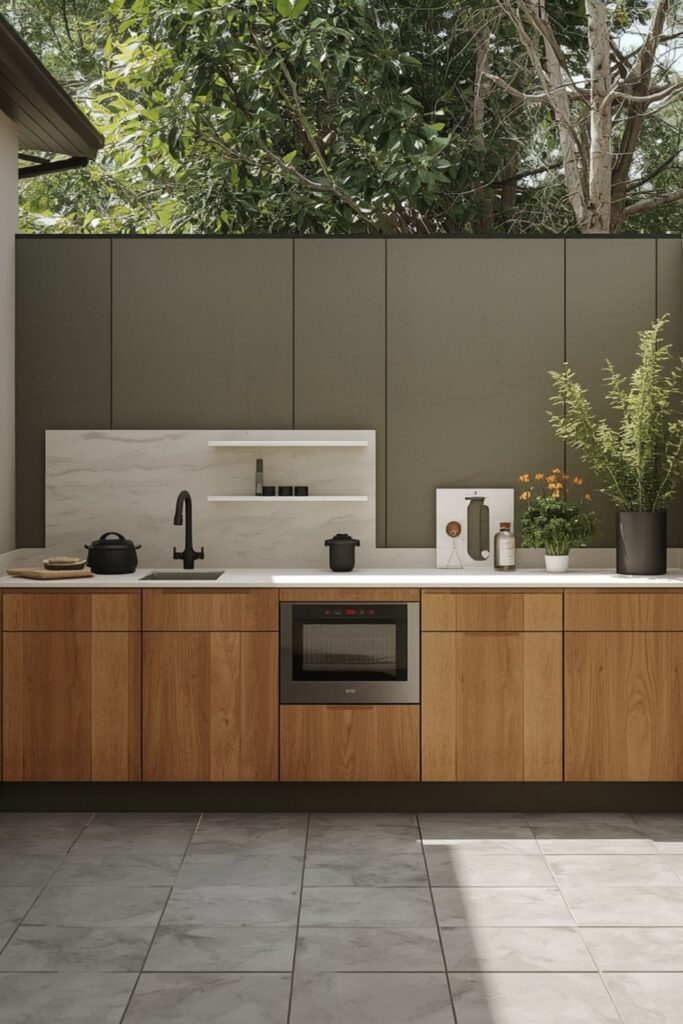
Colour plays a quiet but powerful role in Small Outdoor Kitchen Designs. Earth tones, soft greys, muted greens, and warm neutrals allow the kitchen to blend rather than stand out. These colours reflect natural surroundings and adapt well to different lighting conditions.
Avoiding bright or glossy finishes helps the space remain visually calm. Neutral palettes also make small kitchens feel more spacious and timeless, especially in outdoor environments where changing seasons already provide enough visual interest.
6. Simple Storage That Keeps Surfaces Clear
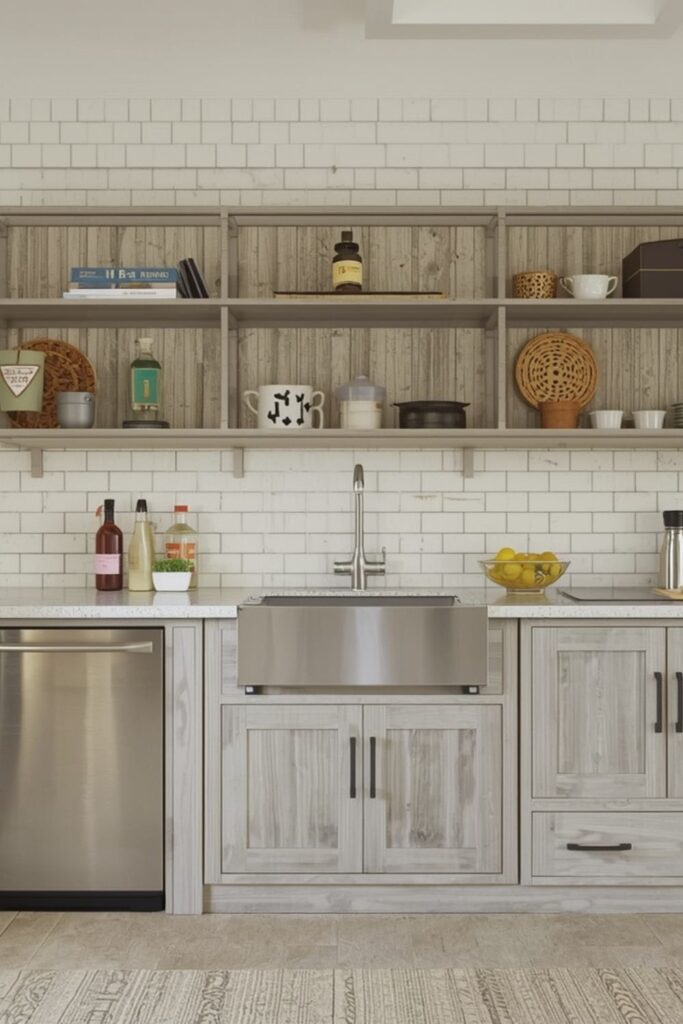
Outdoor kitchens feel most peaceful when surfaces remain uncluttered. Simple closed cabinets, open shelves with limited items, or concealed storage beneath counters keep tools accessible without visual noise.
In Small Outdoor Kitchen Designs, storage should be functional rather than decorative. Keeping only essential items outdoors supports cleanliness and ease of use. This approach works especially well for small outdoor kitchen ideas on a budget, where smart storage replaces excess cabinetry.
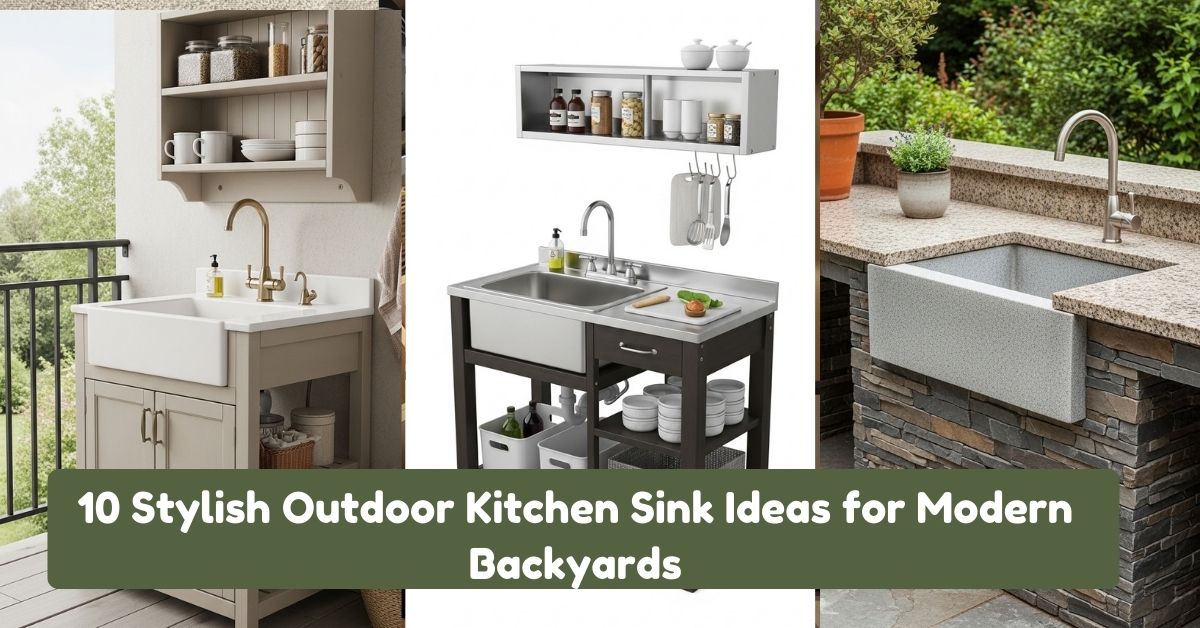
7. Integrated Sinks for Practical Everyday Use
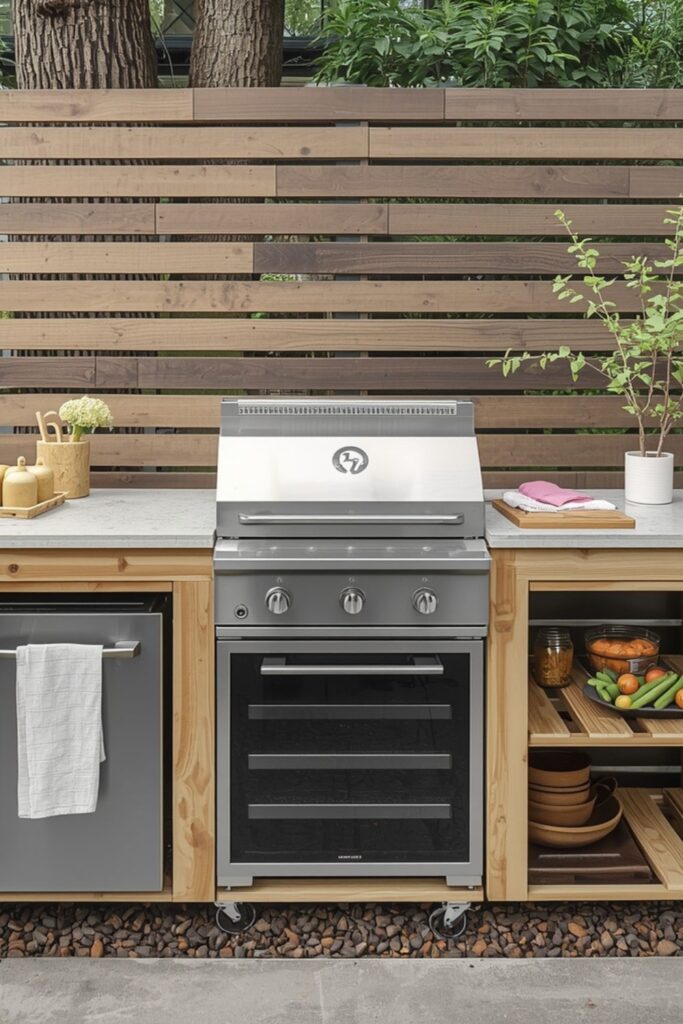
Adding a sink significantly improves the usability of small outdoor kitchens. Even a compact basin allows easy cleaning, food prep, and reduced trips indoors. When placed thoughtfully, sinks enhance flow without demanding extra space.
Small Outdoor Kitchen Designs often integrate sinks seamlessly into countertops, maintaining clean lines. This practical feature supports frequent use and encourages the kitchen to become part of daily routines rather than an occasional setup.
8. Lighting That Respects the Evening Atmosphere
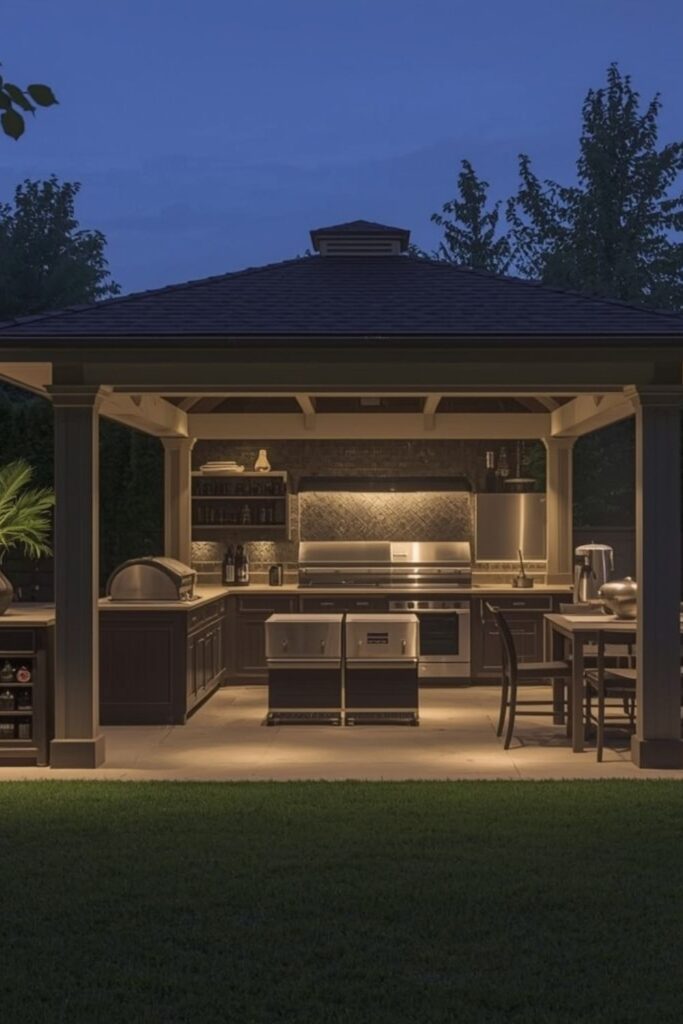
Outdoor kitchens benefit from soft, warm lighting that supports evening cooking without overpowering the natural setting. Low-profile fixtures, under-counter lights, or subtle wall-mounted lamps provide enough visibility while preserving calm.
Good lighting helps Small Outdoor Kitchen Designs feel welcoming after sunset. Rather than bright overhead lights, layered illumination creates a relaxed atmosphere where cooking and conversation feel unhurried.
9. DIY Elements That Feel Personal and Grounded
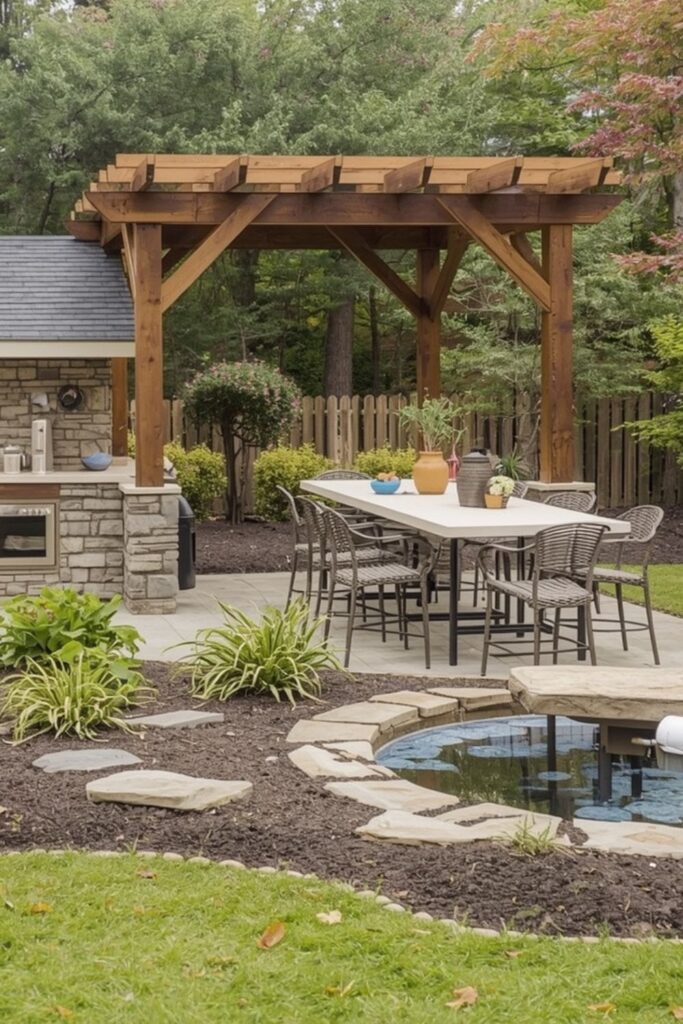
Many small outdoor kitchens gain character through DIY touches. Hand-built counters, repurposed wood, or simple masonry elements allow the kitchen to feel personal rather than manufactured.
DIY Small Outdoor Kitchen Designs often blend more naturally with their surroundings because they respond directly to the site. This approach is especially popular in budget-friendly projects, where creativity replaces expensive finishes.
10. Seamless Connection Between Indoor and Outdoor Spaces
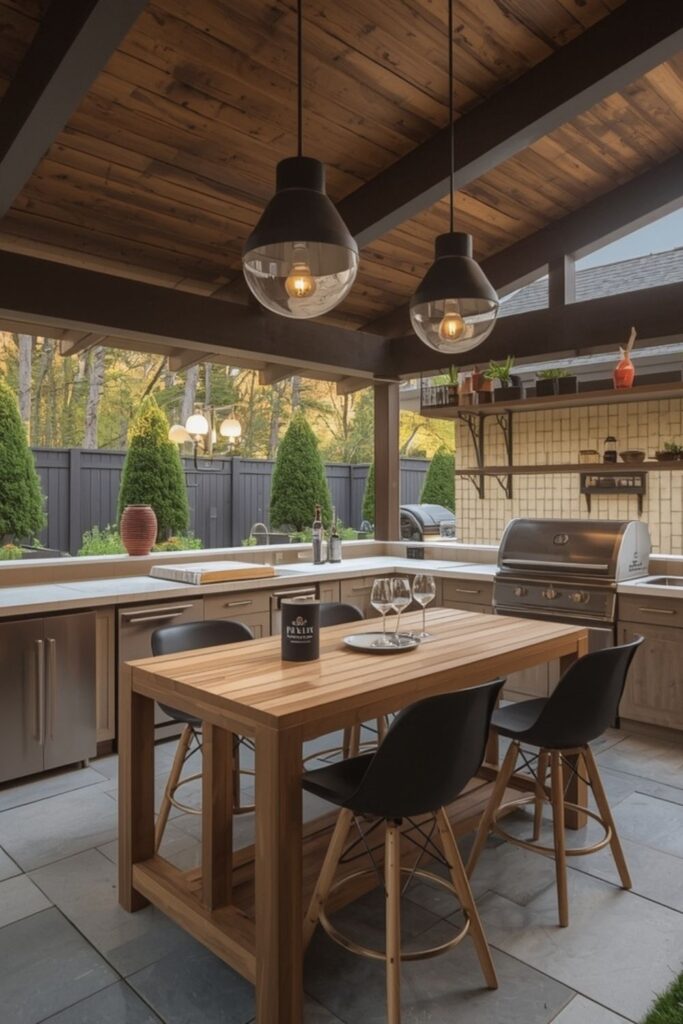
The most successful Small Outdoor Kitchen Designs feel like natural extensions of the home. Using similar materials, colours, or design language creates visual continuity. This connection encourages effortless movement between indoor and outdoor cooking spaces.
When the transition feels smooth, the outdoor kitchen becomes part of everyday life. It supports casual meals, slow mornings, and relaxed evenings without requiring a change in routine or mindset.
Frequently Asked Questions
1. Are small outdoor kitchen designs practical for everyday use?
Yes, Small Outdoor Kitchen Designs can be highly practical when planned around real cooking habits. Compact layouts with essential features support frequent use without unnecessary complexity.
2. What materials work best for blending outdoor kitchens with nature?
Natural materials such as stone, wood, concrete, and matte metal blend well with outdoor environments. They age gracefully and feel visually calm across seasons.
3. Can small outdoor kitchens be built on a budget?
Small Outdoor Kitchen Designs often suit budget projects because they focus on essentials. DIY construction, simple layouts, and natural materials help control costs without sacrificing quality.
4. Do outdoor kitchens need a roof?
A roof is optional but beneficial. Light roofing solutions protect the kitchen while maintaining openness, especially in climates with frequent sun or rain.
Conclusion
Small Outdoor Kitchen Designs succeed when they respect both space and nature. By focusing on simplicity, natural materials, and thoughtful layouts, these kitchens become quiet companions to daily life rather than statement features. They invite slower cooking, open-air meals, and moments of connection without demanding attention.
When an outdoor kitchen blends seamlessly with its surroundings, it supports comfort and longevity. Small, well-planned spaces often prove more meaningful over time, offering a calm and functional place where cooking feels naturally woven into the landscape.
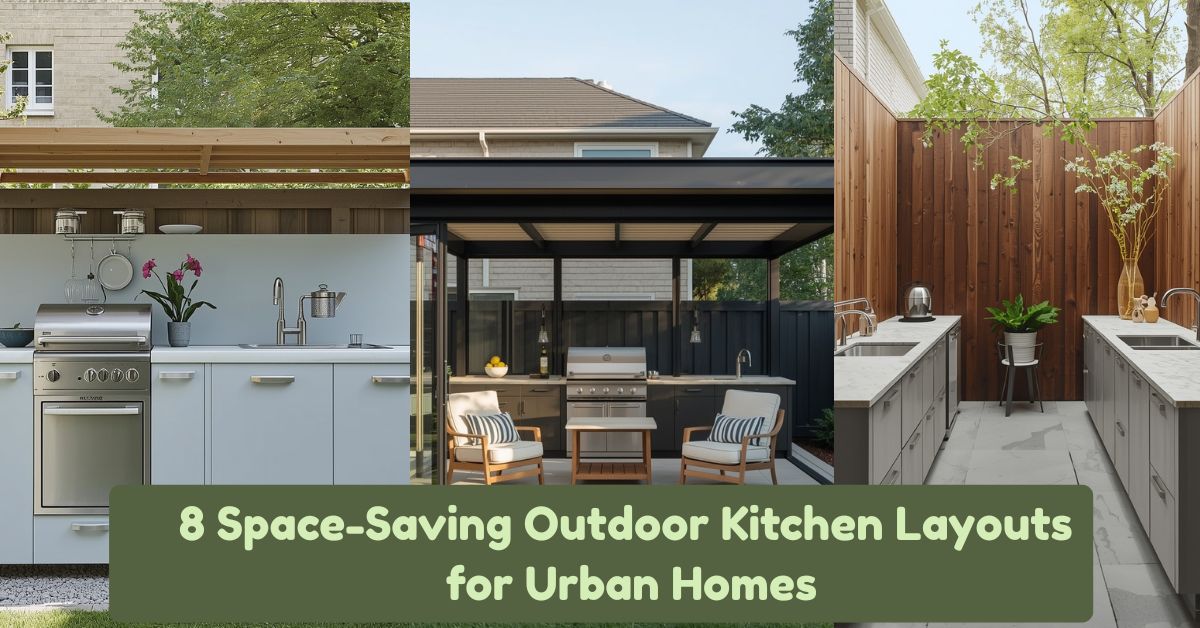
Explore More: 8 Space-Saving Outdoor Kitchen Layouts for Urban Homes