
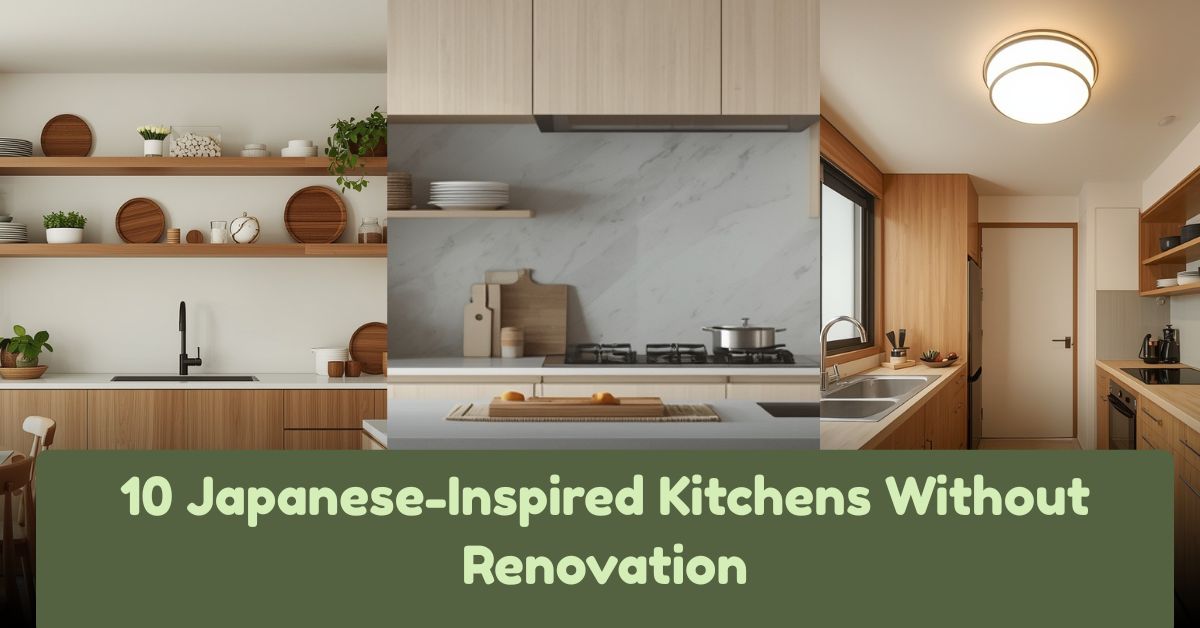
Many homeowners are drawn to Japanese-inspired kitchens because they feel calm, balanced, and quietly functional. The appeal is not rooted in luxury or renovation-heavy transformations, but in subtle changes that reshape how the kitchen feels and works. A Japanese-inspired kitchen without renovation focuses on atmosphere, layout awareness, and thoughtful interior choices rather than structural change.
10 Japanese-Inspired Kitchens Without Renovation. Japanese kitchen design emphasizes restraint. It relies on natural materials, uncluttered surfaces, and purposeful placement to create visual ease. This approach works especially well in small homes and apartments, where renovation may not be practical but calm living is still desired.
Modern Japanese kitchen design shows that even small adjustments can change the experience of a space. Through lighting, storage choices, cabinet treatment, and material selection, kitchens can feel quieter and more intentional. These Japanese-inspired kitchen ideas offer a gentle path to transformation without construction, cost, or disruption.
10 Japanese-Inspired Kitchen Without Renovation Ideas
Table of Contents
1. Clear the Visual Field Before Adding Anything
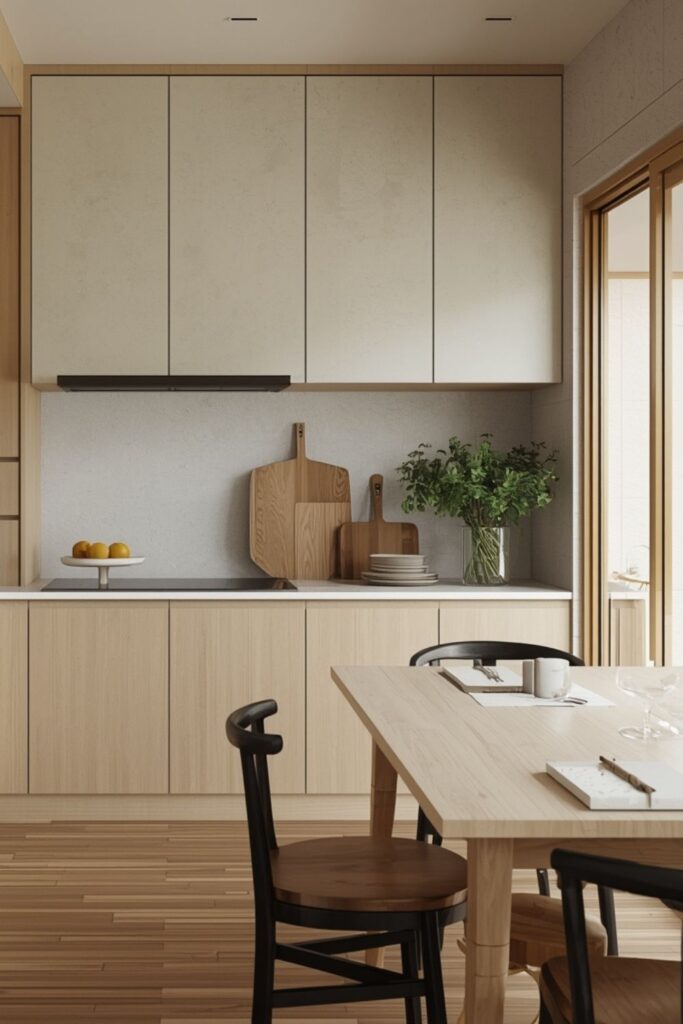
Japanese-inspired kitchens begin by removing visual noise rather than adding new elements. Clearing countertops, limiting accessories, and reducing exposed items immediately changes how the kitchen feels. This step requires no renovation, only careful editing.
Minimalist Japanese kitchen interiors rely on empty space to create calm. When surfaces are allowed to rest, the kitchen feels larger and more composed. This approach works especially well in Japanese kitchen design for small space homes, where clarity supports comfort.
2. Introduce Natural Materials Through Touch Points

Without changing cabinets or layouts, natural materials can be introduced through handles, cutting boards, trays, or shelving. Wood, bamboo, and stone add warmth and texture without altering the structure of the kitchen.
Japanese-inspired kitchen materials are subtle and tactile. Even small wooden details soften modern interiors and bring balance. This technique is often seen in Japanese kitchens photos, where material restraint creates visual harmony rather than contrast.
3. Use Neutral Colors to Quiet the Space

Colour plays a powerful role in Japanese-inspired kitchens without renovation. Soft whites, warm greys, and earthy tones help reduce visual stimulation and allow the kitchen to feel settled throughout the day.
Modern Japanese kitchen design avoids bold contrasts. Instead, colour is used to support light and proportion. Neutral palettes also pair naturally with Japandi style kitchen interiors, blending Japanese calm with modern simplicity.
4. Simplify Cabinet Appearance Without Replacement
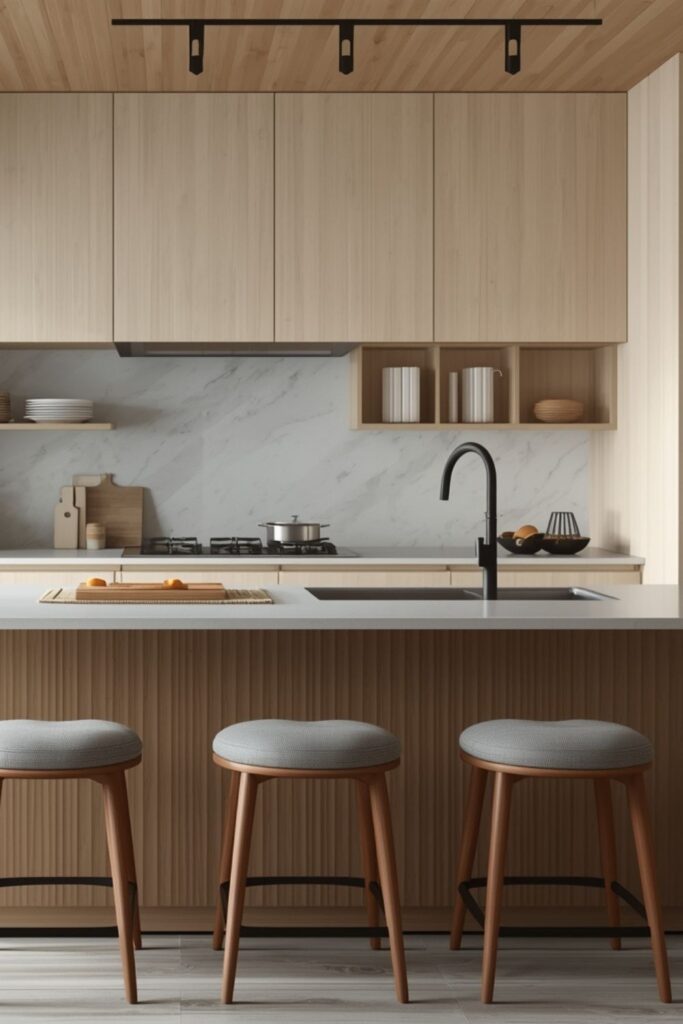
Replacing cabinets is not necessary to achieve a Japanese-inspired look. Visual simplicity can be achieved by removing decorative hardware, choosing slim handles, or keeping cabinet fronts visually uniform.
Japanese style kitchen cabinets often appear understated and integrated. When cabinets blend quietly into the wall, the kitchen feels more open. This approach is commonly used in Japanese-inspired kitchen without renovation interior updates, where change comes from restraint rather than replacement.
5. Reorganize Storage for Calm Daily Use
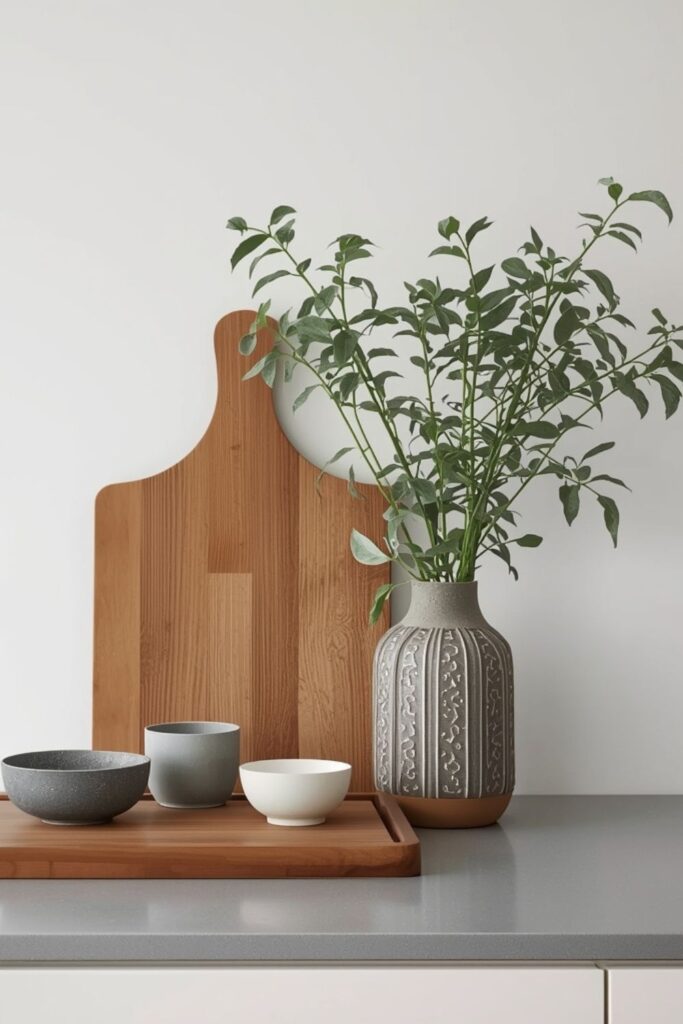
Japanese kitchens stay calm because storage is intentional. Reorganizing drawers, grouping similar items, and storing non-essentials out of sight improves both function and appearance without renovation.
Minimalist Japanese kitchen work focuses on ease of use. When everything has a clear place, the kitchen feels lighter and easier to maintain. This principle applies equally to homes inspired by Japanese restaurant kitchen design, where efficiency supports clarity.
6. Add Soft Lighting to Change Atmosphere
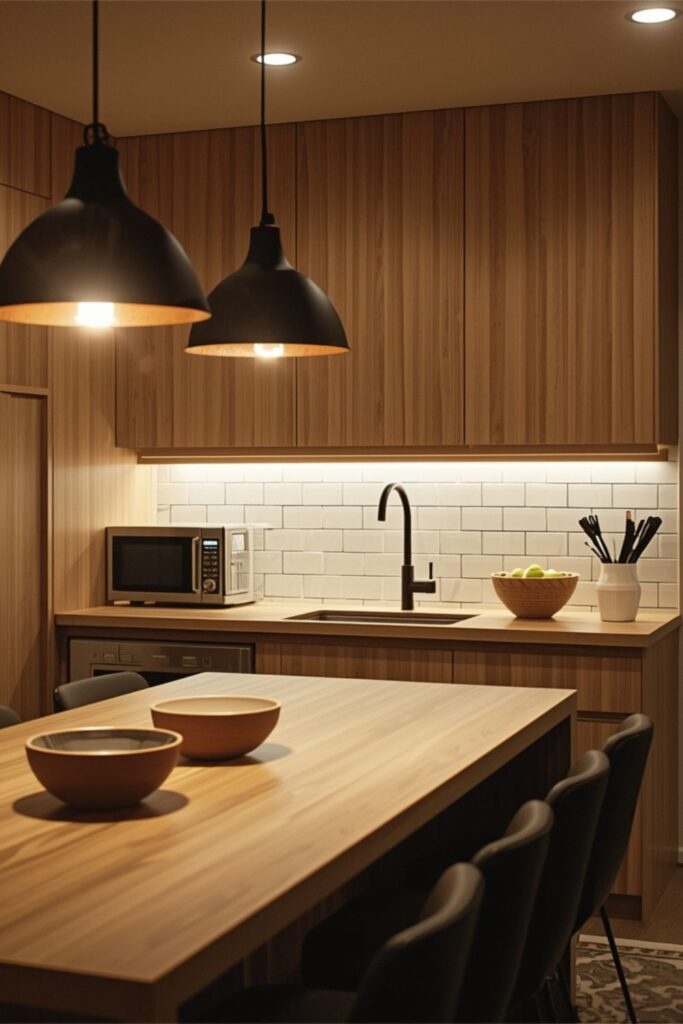
Lighting can completely change the mood of a kitchen without any structural work. Warm bulbs, under-cabinet lighting, or shaded pendants introduce a gentle glow that supports calm routines.
Japanese-inspired kitchens avoid harsh brightness. Soft lighting enhances materials and reduces visual strain, especially in evening hours. This adjustment is often highlighted in Japanese-inspired kitchen without renovation ideas and planning guides.
7. Limit Decorative Elements to Functional Pieces
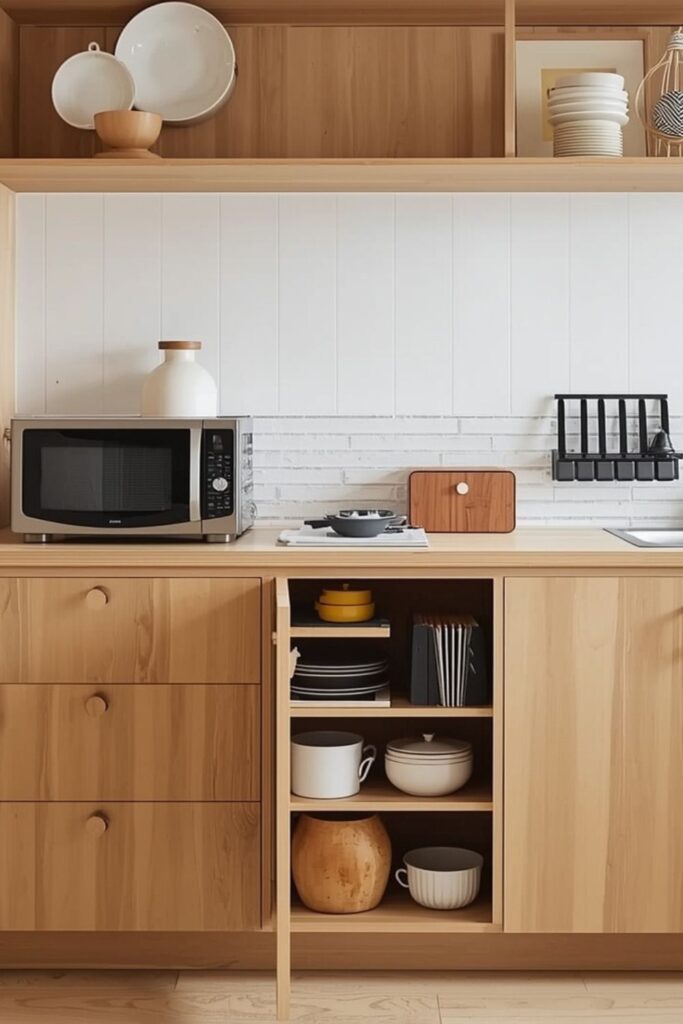
Japanese interiors favor function over decoration. In a Japanese-inspired kitchen, a single functional object such as a ceramic bowl, wooden tray, or tea set becomes the visual focus rather than multiple decorative items.
This principle helps kitchens feel intentional rather than styled. It aligns naturally with minimalist Japanese kitchen philosophy, where beauty comes from usefulness. Even small kitchens benefit from this sense of clarity.
8. Balance Modern Elements With Soft Details
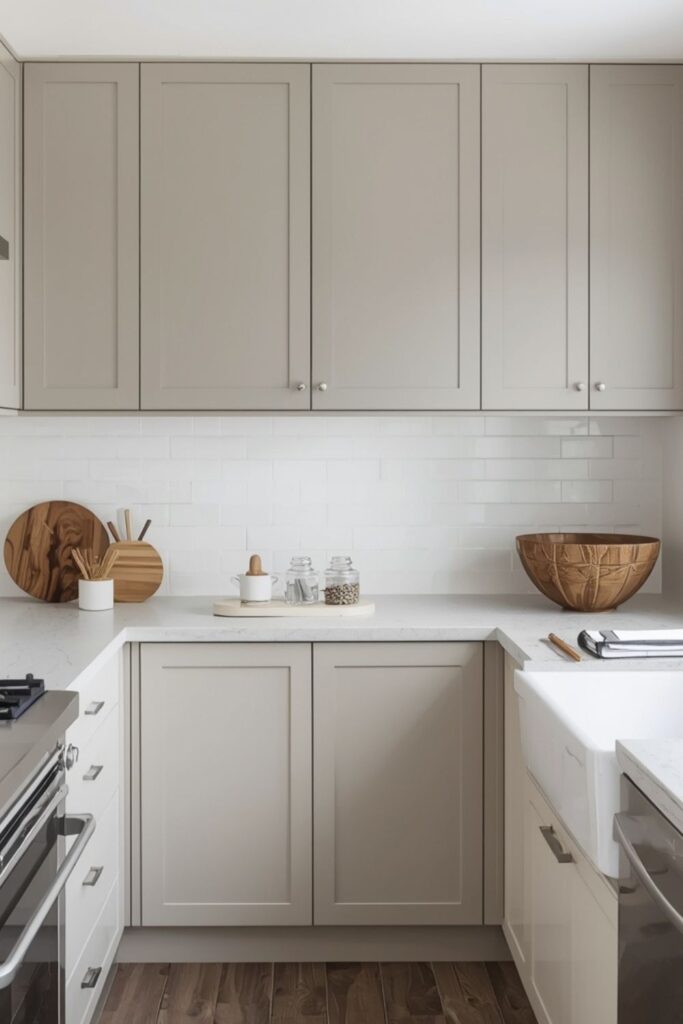
Modern kitchens often feel cold when surfaces dominate the space. Japanese-inspired kitchens soften modern finishes by adding fabric, wood, or matte textures through small details like runners, curtains, or stools.
Modern Japanese kitchen design balances clean lines with warmth. This contrast creates kitchens that feel contemporary but calm. Japandi style kitchen interiors frequently use this method to avoid visual harshness without renovation.
9. Create Visual Order Through Repetition
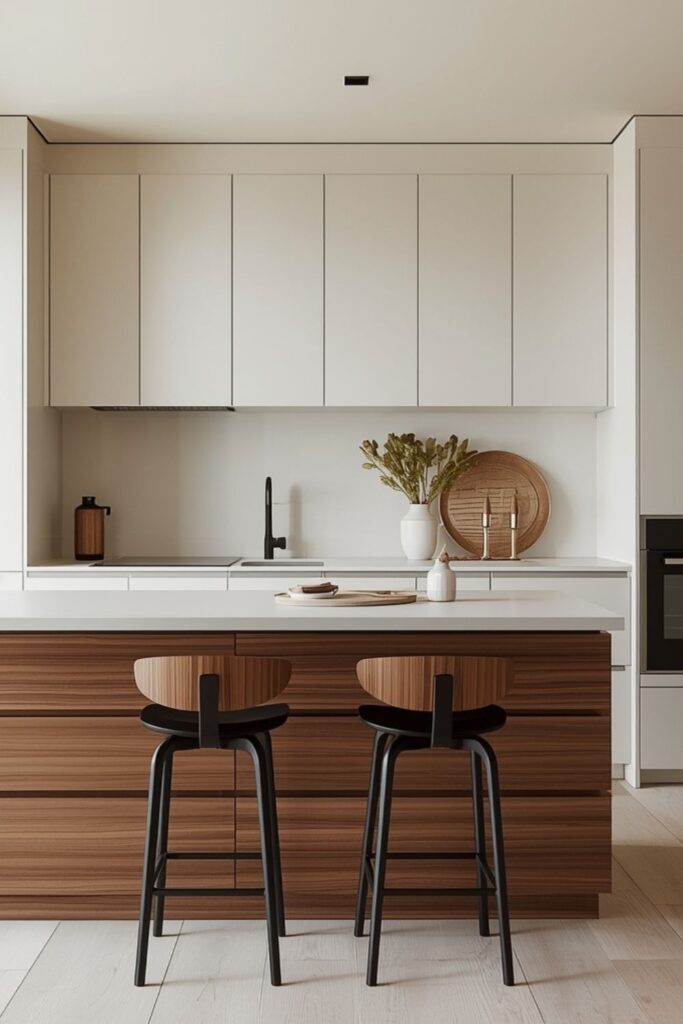
Repeating materials, colours, or shapes creates a sense of order. Matching containers, aligned accessories, or consistent finishes help the kitchen feel cohesive without altering layout or structure.
Japanese-inspired kitchen without renovation work often relies on repetition rather than contrast. This quiet consistency supports visual rest and makes even busy kitchens feel more composed.
10. Allow Empty Space to Remain Empty
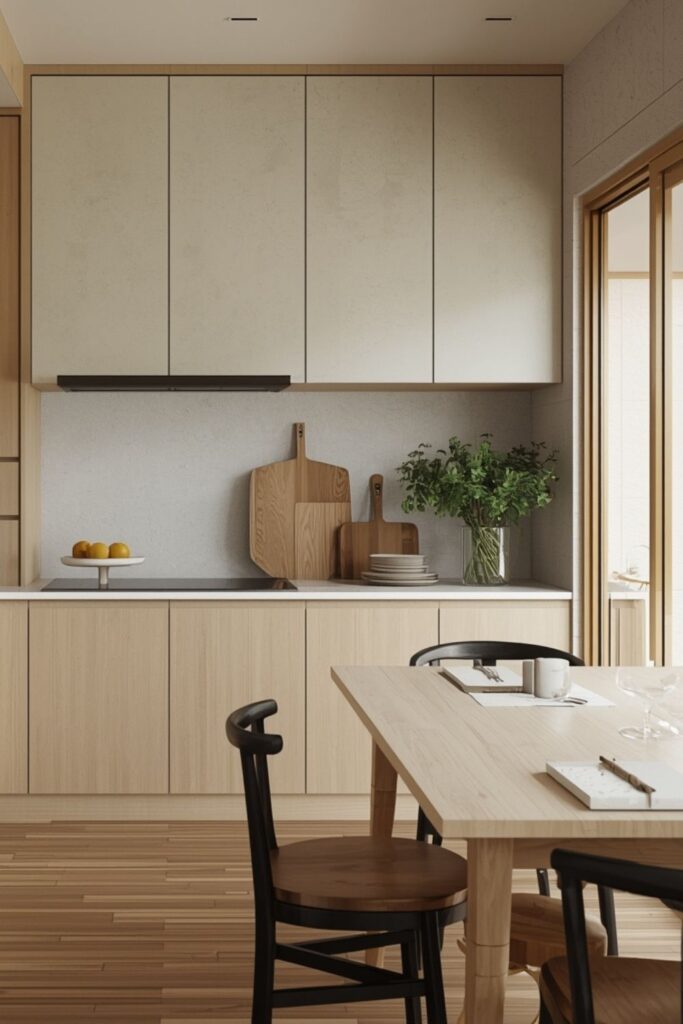
One of the most important Japanese-inspired kitchen ideas is allowing space to remain unused. Empty counters, clear shelves, and open corners are intentional, not incomplete.
Japanese design values negative space as much as objects. This principle supports calm living and long-term comfort. It is frequently emphasized in Japanese-inspired kitchen without renovation PDF guides and traditional design philosophy.
FAQ: Japanese-Inspired Kitchen Without Renovation
Q1. Can a Japanese-inspired kitchen be created in a small apartment?
Yes. Japanese kitchen design for small space living focuses on clarity, compact organization, and visual calm rather than size.
Q2. Do I need new cabinets for a Japanese-inspired kitchen?
No. Simplifying cabinet appearance and reducing visual clutter often achieves the effect without replacement.
Q3. What defines modern Japanese kitchen design?
Modern Japanese kitchens blend minimalism, natural materials, soft lighting, and practical layouts that support everyday routines.
Q4. Is Japandi style suitable for non-renovated kitchens?
Yes. Japandi style kitchens work especially well without renovation because they rely on colour balance, material warmth, and restraint.
Conclusion
A Japanese-inspired kitchen without renovation focuses on how a space feels rather than how much it changes. Through thoughtful organization, soft materials, gentle lighting, and visual restraint, kitchens can become calmer and more comfortable without construction.
These Japanese-inspired kitchen ideas support everyday living by reducing noise and encouraging simplicity. When kitchens feel balanced and intentional, daily routines slow naturally. Without renovation, Japanese design offers a quiet and lasting way to transform the heart of the home.
Explore More:



2 thoughts on “10 Japanese-Inspired Kitchens Without Renovation”