
Kitchen wallpaper is no longer just a decorative afterthought. In modern homes across the USA, UK, Canada, Australia, and similar regions, it has become a practical wall solution for people who want warmth and visual calm without heavy construction. Unlike living rooms or bedrooms, kitchens demand surfaces that can handle heat, moisture, and daily cleaning.
A kitchen wallpaper that works must balance design with performance. It should resist grease, tolerate warmth, and remain easy to clean without peeling or fading. When chosen carefully, wallpaper can soften kitchen walls while standing up to everyday cooking routines.
Kitchen Wallpaper That Works: 8 Practical Guide to Heat & Grease Resistance
Table of Contents
1. Why Kitchens Need Specialized Wallpaper
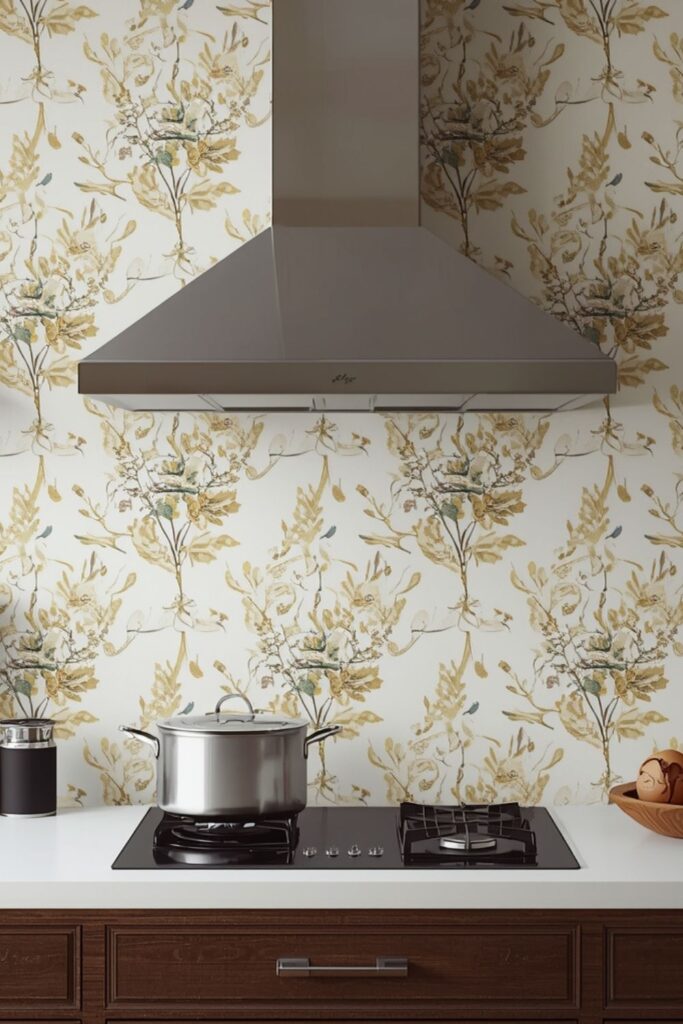
Kitchens are exposed to constant activity. Steam from cooking, oil particles in the air, and temperature changes all affect wall surfaces. Ordinary decorative wallpaper is not designed for these conditions.
Kitchen wallpaper must be waterproof, oil-resistant, and washable. These features prevent staining and make cleaning easier, allowing the wallpaper to remain functional rather than fragile.
2. Waterproof and Oil-Proof Materials That Last
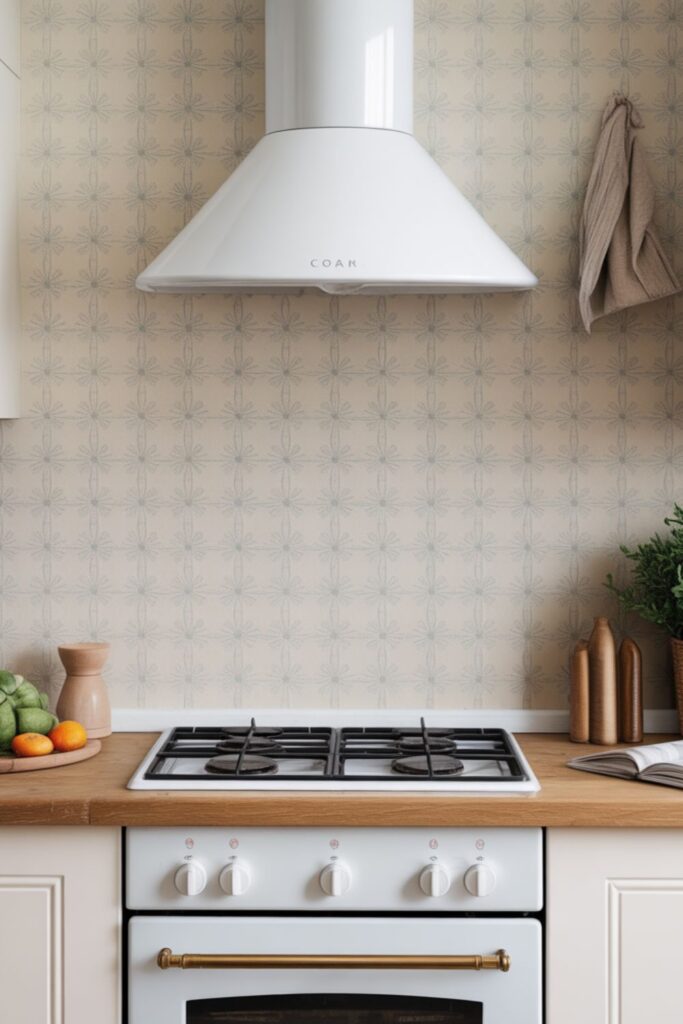
Waterproof finishes are essential for long-term kitchen use. PVC wallpaper waterproof for kitchen applications creates a sealed surface that resists moisture and oil.
Oil-proof kitchen wallpaper prevents grease from absorbing into the material, especially near stoves and prep areas. When combined with a washable layer, it allows frequent cleaning without surface damage.
3. Peel-and-Stick Wallpaper for Flexible Kitchens
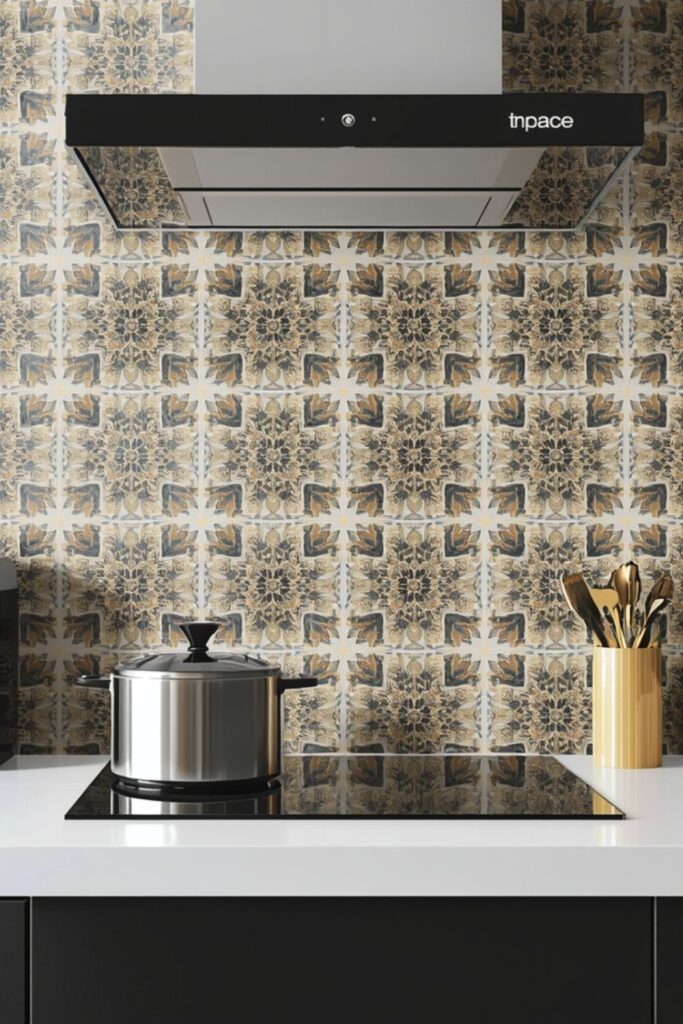
Peel-and-stick kitchen wallpaper that lasts is especially useful in rented homes or apartments. It offers easy installation and removal while still providing moisture resistance.
High-quality peel-and-stick options come with waterproof and oil-proof coatings. These perform best on walls that are not directly exposed to open flames but still experience everyday kitchen activity.
4. Calm Wallpaper Designs That Don’t Overpower the Space
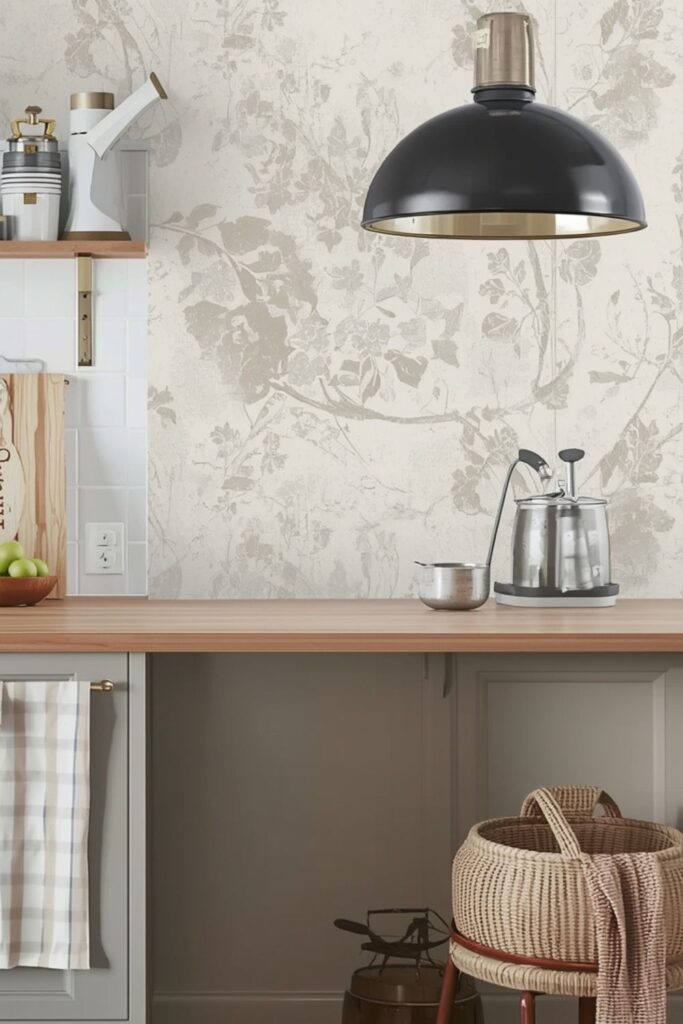
Kitchen wallpaper design should support visual balance. Soft textures, muted colors, and subtle patterns help the kitchen feel calm rather than busy.
Wallpaper designs that add calm without overpowering the room age better over time. They work well in both small kitchens and open-plan layouts where visual harmony matters.
5. Best Areas to Use Kitchen Wallpaper
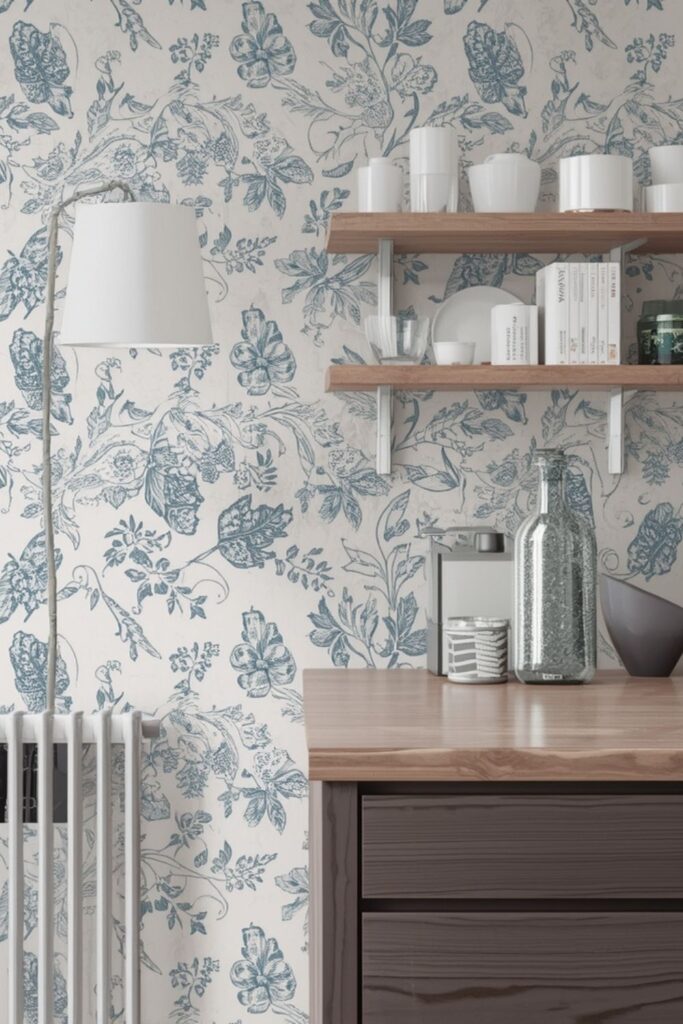
Not every kitchen wall needs wallpaper. Strategic placement increases durability and keeps maintenance simple.
Wallpaper works best on:
- Walls away from direct heat sources
- Areas near kitchen racks or shelves
- Breakfast corners or dining nooks
- Accent walls in open kitchens
6. Maintenance Habits That Extend Wallpaper Life
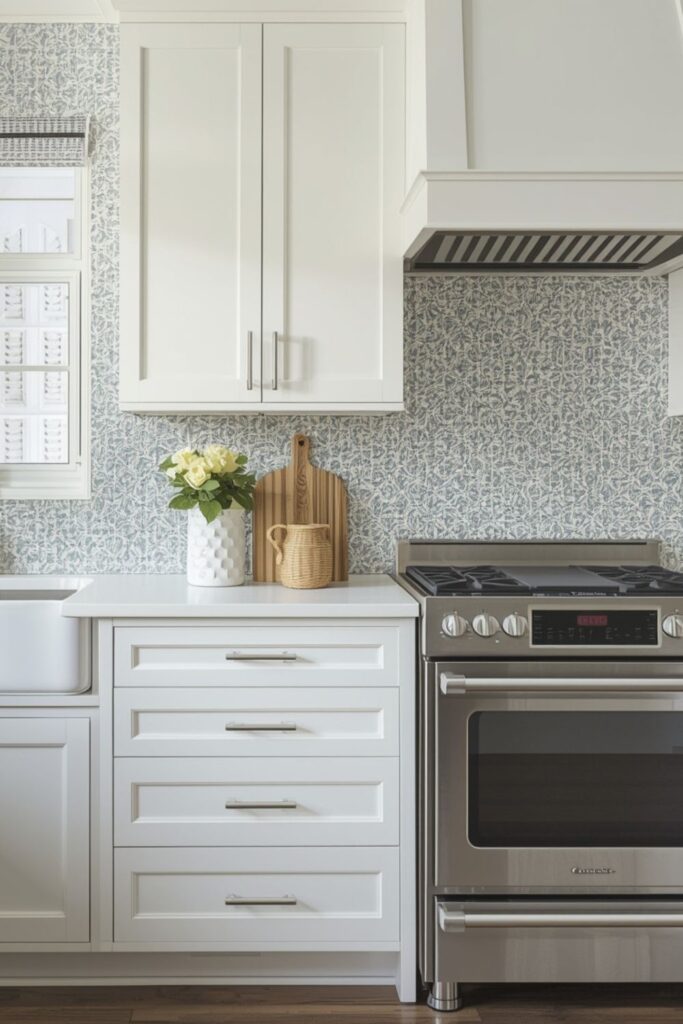
Even durable kitchen wallpaper benefits from proper care. Light, regular cleaning prevents grease buildup and keeps the surface fresh.
Use a soft damp cloth and mild cleaner. Avoid abrasive sponges or harsh chemicals, as they can damage the protective coating over time.
7. Choosing Wallpaper for Long-Term Use
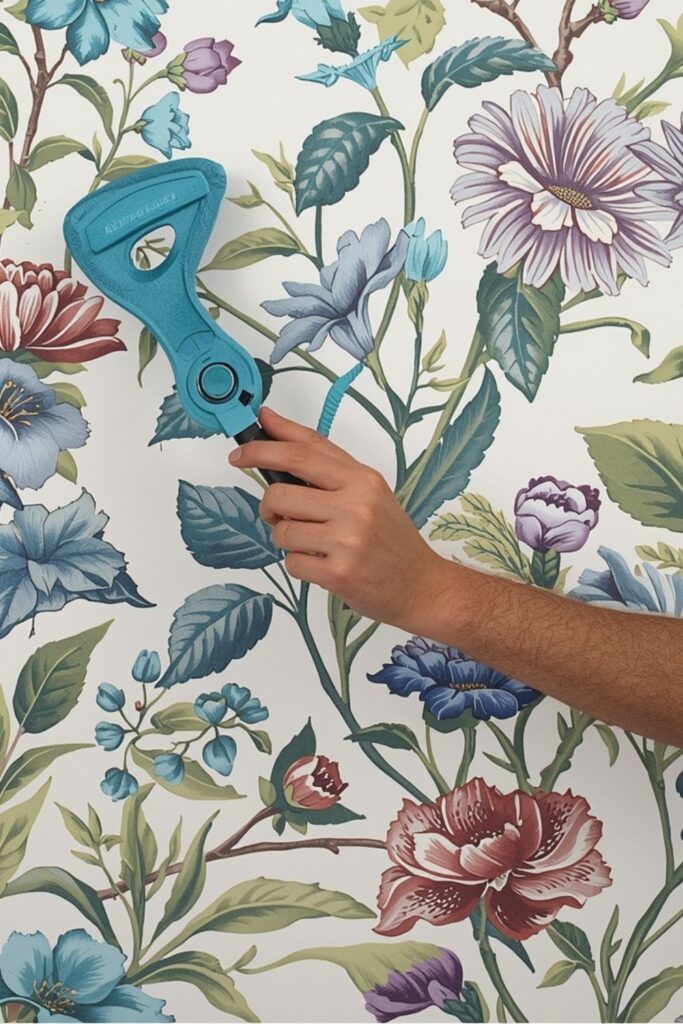
Durability depends on material quality rather than appearance alone. Always check whether the kitchen wallpaper is waterproof, oil-proof, and washable.
Reliable specifications and tested coatings matter more than trendy designs. This approach helps create kitchens that feel intentional and lasting.
8. Common Mistakes to Avoid
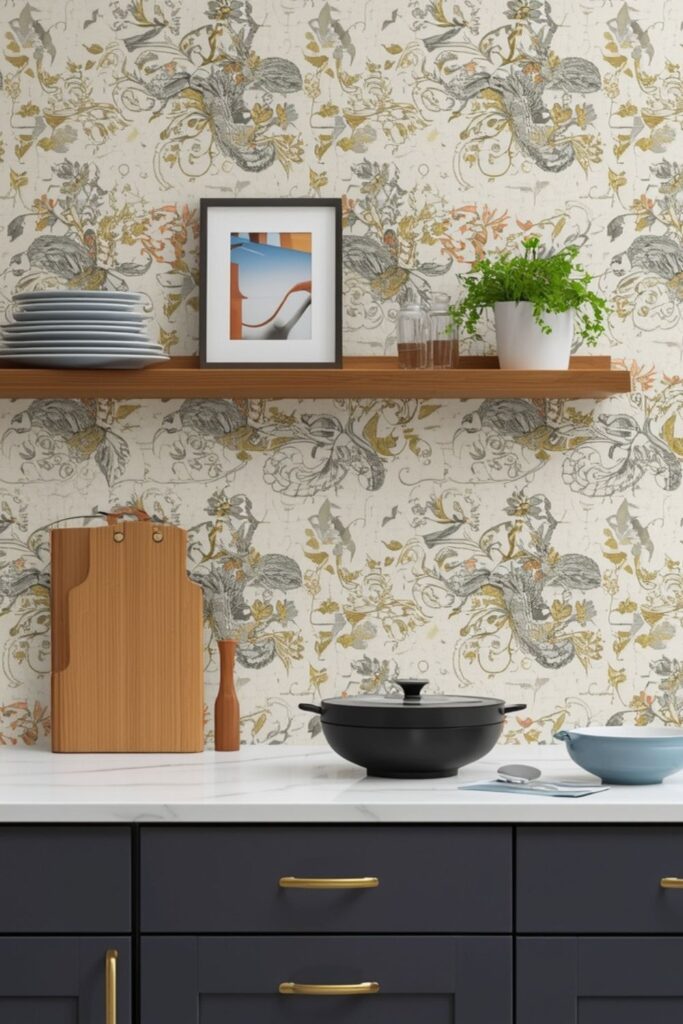
Avoiding small mistakes can significantly increase wallpaper lifespan:
- Placing wallpaper directly behind gas burners
- Using non-washable wallpaper in cooking zones
- Ignoring heat and moisture ratings
- Over-cleaning with harsh tools
Careful placement and product selection prevent early wear.
FAQ: Kitchen Wallpaper That Works
Q1. Is wallpaper suitable for kitchens?
Yes, waterproof and oil-proof wallpaper performs well when used correctly.
Q2. Can kitchen wallpaper handle heat?
It can tolerate indirect heat but should not be installed directly behind flames.
Q3. Is peel-and-stick wallpaper reliable for kitchens?
High-quality peel-and-stick wallpaper works well in low to moderate exposure areas.
Q4. How often should kitchen wallpaper be cleaned?
Light cleaning once a week is usually enough to prevent grease buildup.
Conclusion
Kitchen wallpaper that works is about choosing materials that respect the realities of cooking spaces. Waterproof, oil-proof, and washable surfaces allow wallpaper to function comfortably in active kitchens.
When used thoughtfully, kitchen wallpaper adds softness and warmth without compromising practicality. With the right design and placement, it becomes a quiet, durable part of everyday kitchen life.
Explore More: 10 Textured Wallpaper Designs That Feel Warm and Natural












1 thought on “Kitchen Wallpaper That Works: 8 Practical Guide to Heat & Grease Resistance”