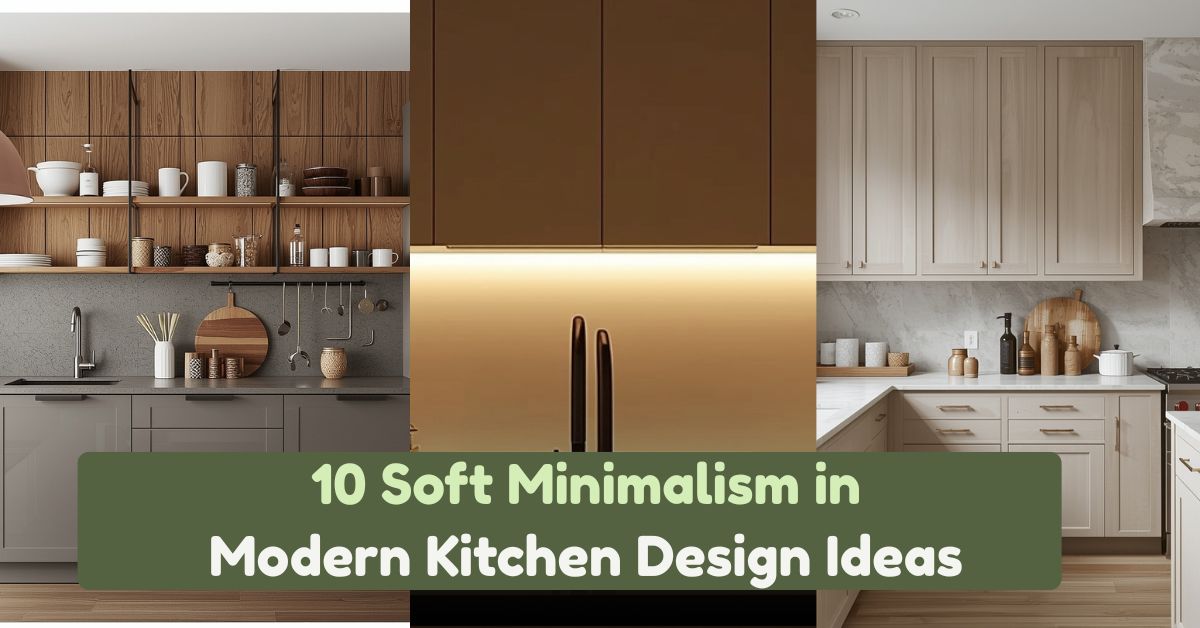
Modern kitchens have gradually shifted from being purely functional spaces to becoming emotional ones. In busy households, the kitchen is where mornings start rushed, evenings slow down, and everyday routines repeat. This is exactly where soft minimalism in modern kitchen design becomes relevant.
Unlike strict minimalism—which often feels cold and overly controlled—soft minimalism focuses on visual calm, material warmth, and practical comfort. It removes excess without stripping away personality. This design approach is especially effective for small homes, apartments, and modern households where ease of use matters as much as appearance.
Below are 10 detailed soft minimalism kitchen ideas that not only look good today but continue to feel right over time.
10 Soft Minimalism in Modern Kitchen Design Ideas
Table of Contents
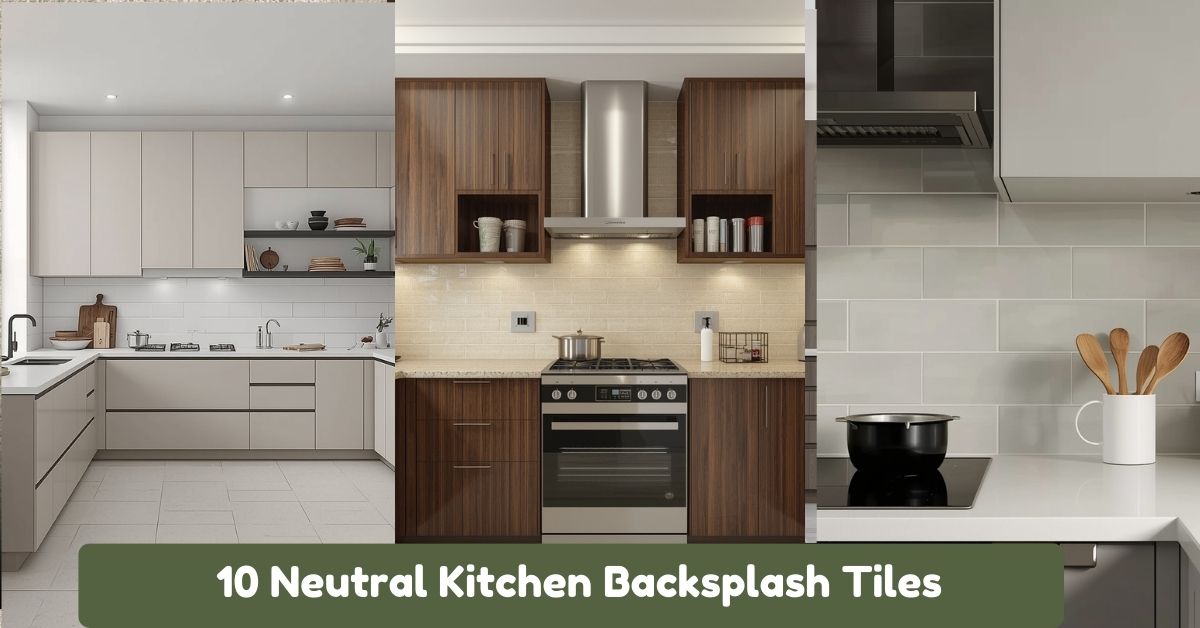
1. Warm Neutral Color Palettes That Reduce Visual Stress
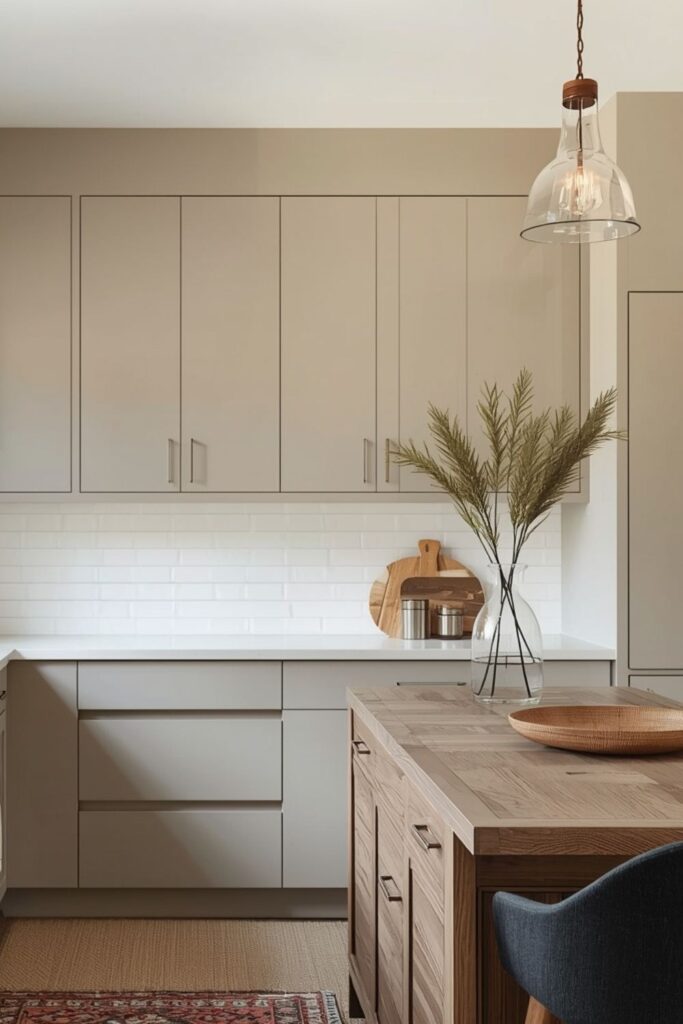
Soft minimal kitchens avoid stark whites and high-contrast combinations. Instead, they rely on warm neutrals such as cream, sand, light greige, and muted taupe.
These colors reflect light gently, making the kitchen feel open without being clinical. In smaller kitchens, warm neutrals help walls, cabinets, and ceilings blend visually, reducing sharp boundaries that make spaces feel cramped.
This approach also ages well—neutral kitchens don’t feel outdated quickly, making them ideal for long-term homes.
2. Minimalist Kitchen Cabinets with Soft Finishes
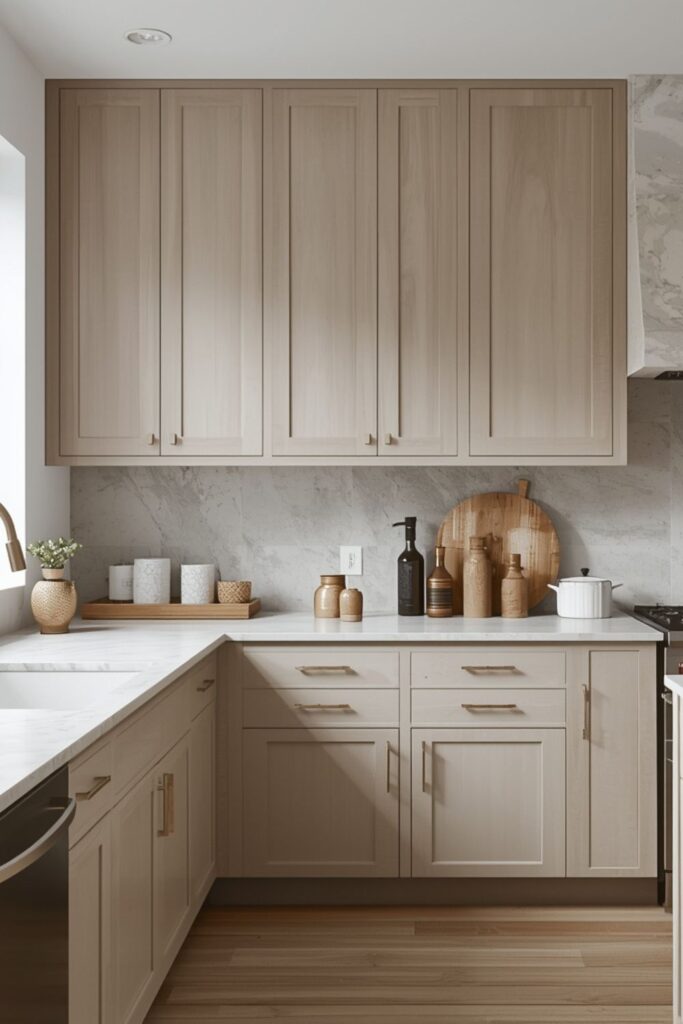
Cabinetry plays the biggest visual role in a minimalist kitchen. Soft minimalism favors:
- Flat or slab doors
- Matte or satin finishes
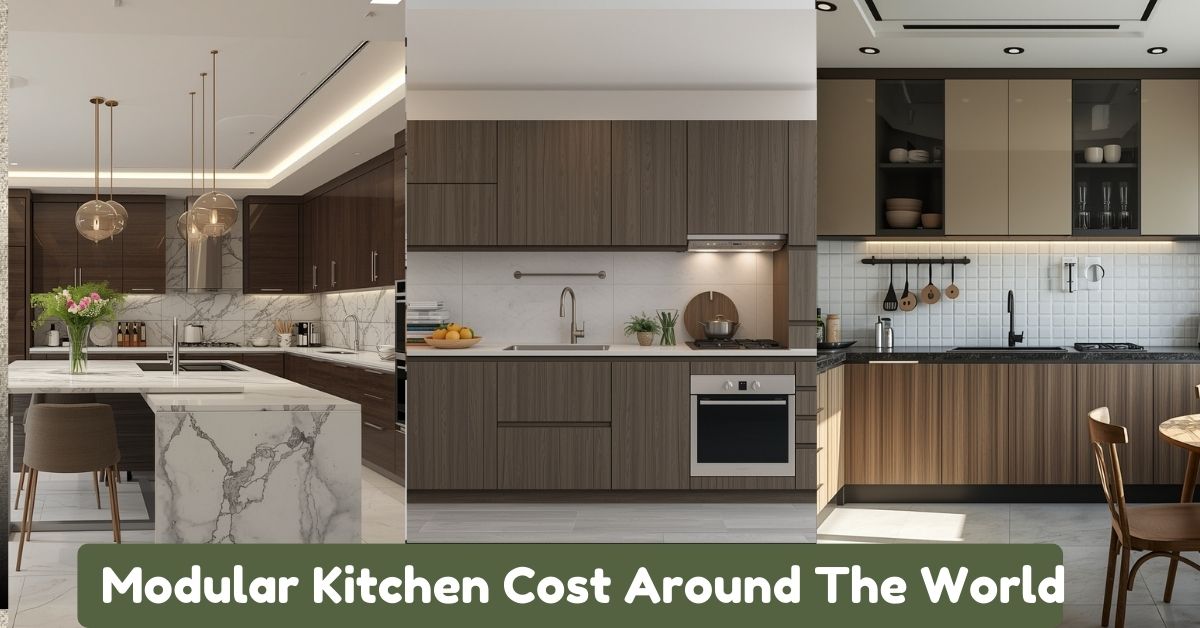
- Muted wood textures
High-gloss cabinets are avoided because they amplify light and fingerprints, creating visual noise. Instead, matte cabinets absorb light softly, creating a calmer surface.
Minimalist kitchen cabinets in soft finishes also hide wear better, making them practical for everyday use.
3. Handle-Less Designs That Still Feel Human
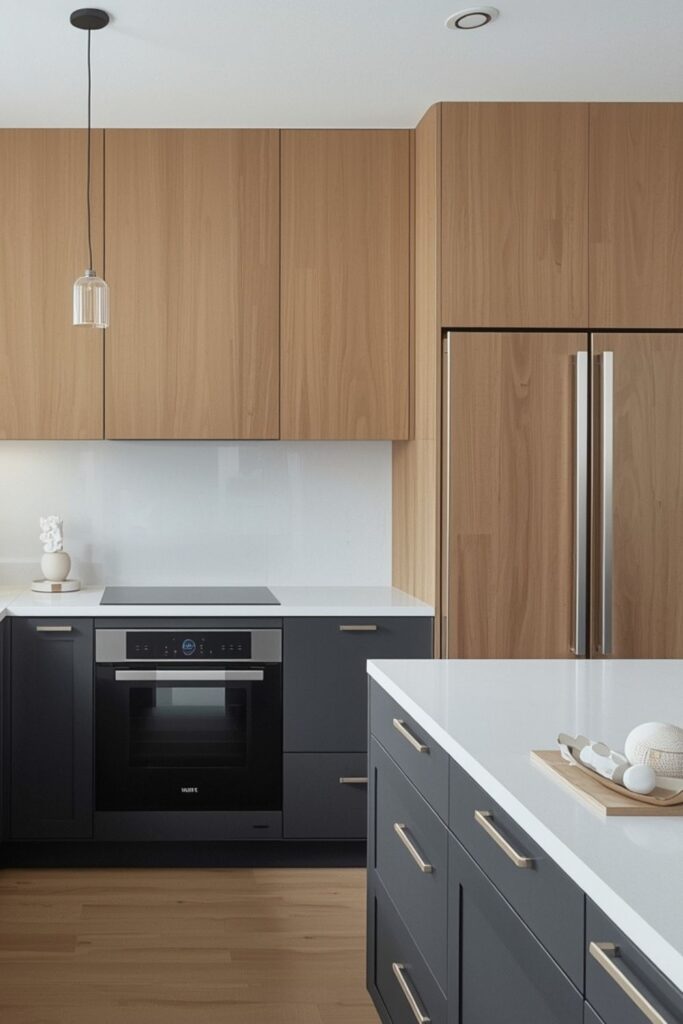
Handle-less cabinets are common in modern kitchens, but soft minimalism ensures they don’t feel too mechanical.
Integrated grooves, recessed pulls, or edge channels allow smooth access without breaking visual flow. Rounded corners and soft-touch materials add subtle warmth, ensuring the kitchen doesn’t feel harsh.
This design works particularly well in small kitchens, where uninterrupted surfaces make the room feel larger.
4. Natural Materials That Add Quiet Texture
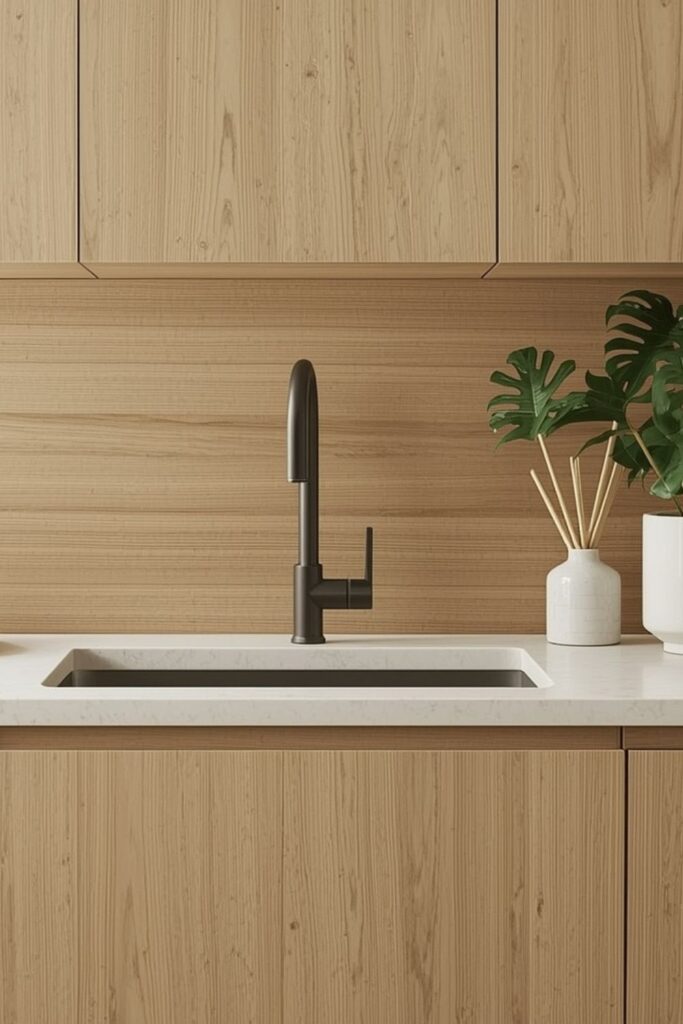
Instead of decorative elements, soft minimalism uses materials to create interest:
- Light wood grains
- Matte stone countertops
- Subtle terrazzo or limestone
- Brushed metal fixtures
These textures prevent the kitchen from feeling flat while maintaining simplicity. Even small material changes—like a wooden backsplash panel—can bring depth without clutter.
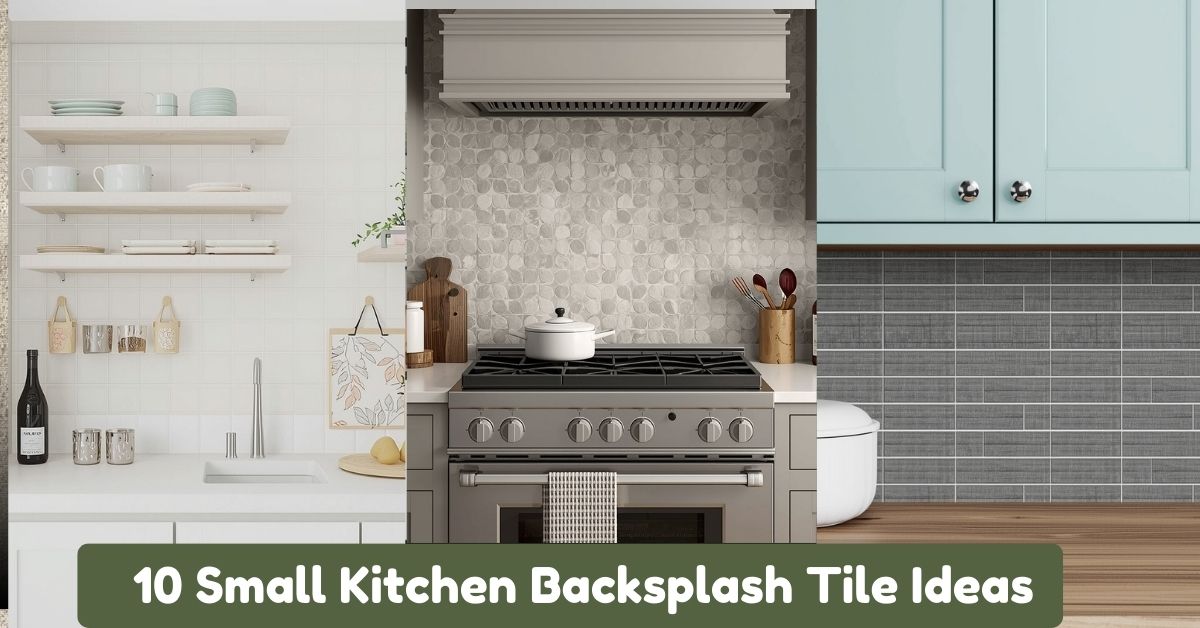
5. Low-Contrast Backsplashes for Visual Continuity
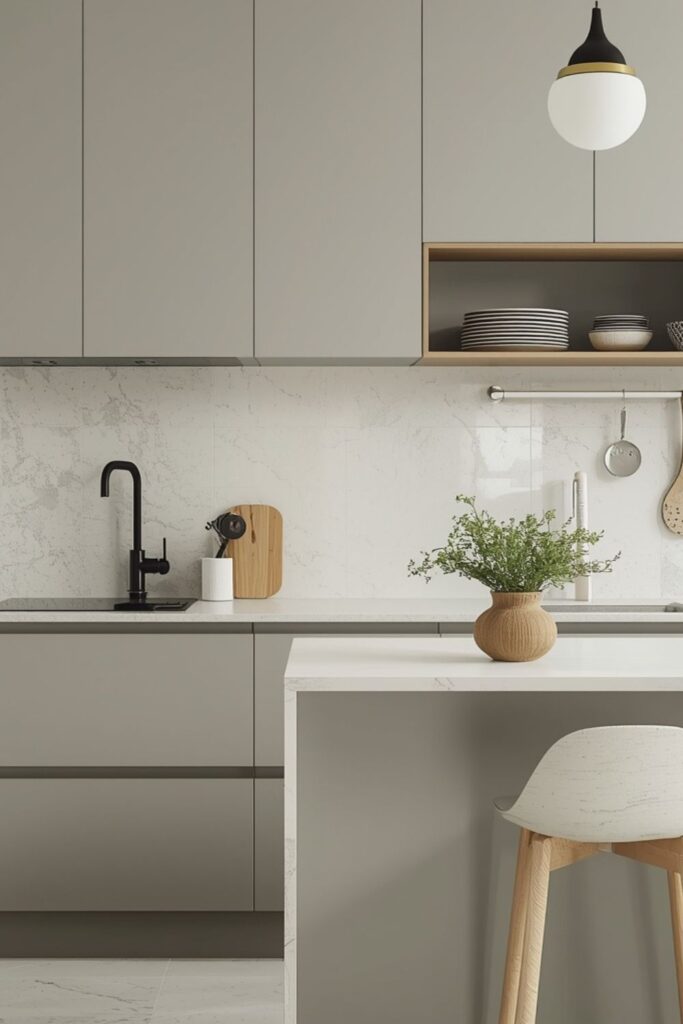
A soft minimal kitchen avoids bold or patterned backsplash tiles. Instead, backsplashes blend with the rest of the kitchen:
- Same color family as cabinets
- Continuous stone slabs
- Microcement finishes
This continuity reduces visual breaks, making small kitchens feel calmer and more cohesive. This makes the kitchen more Soft Minimalism in Modern Kitchen Design.
6. Soft Lighting Instead of Harsh Brightness
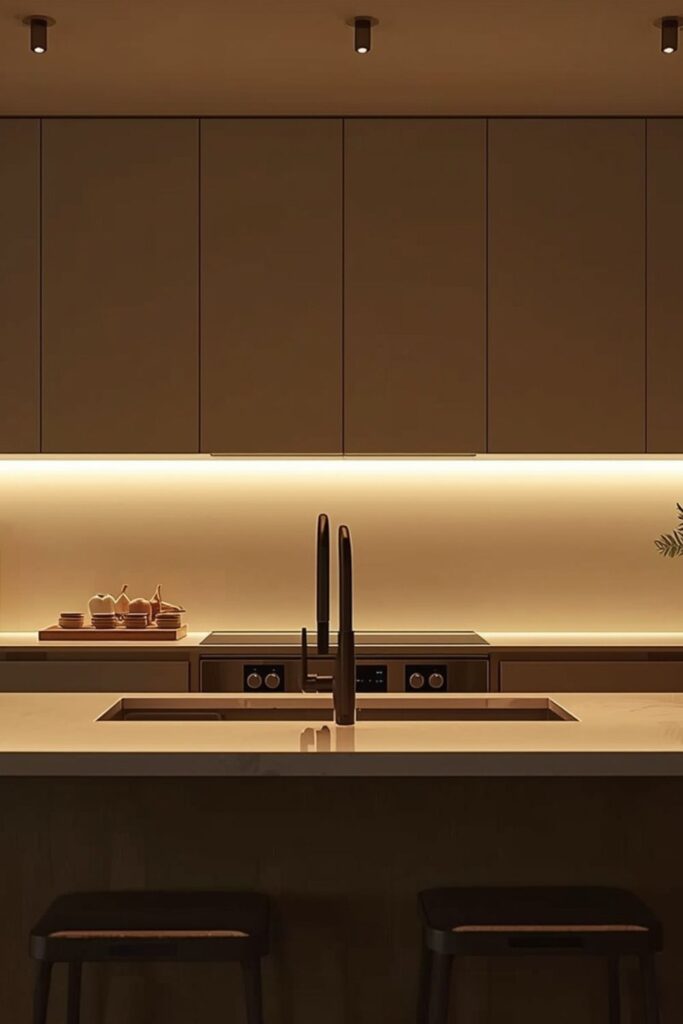
Lighting defines mood in minimalist kitchens. Soft minimalism focuses on layered, warm lighting:
- Under-cabinet LED strips
- Diffused ceiling lights
- Warm-tone task lighting
This lighting approach supports functionality while creating a relaxed environment, especially during early mornings and evenings.
7. Minimalist Kitchen Colors That Flow Together
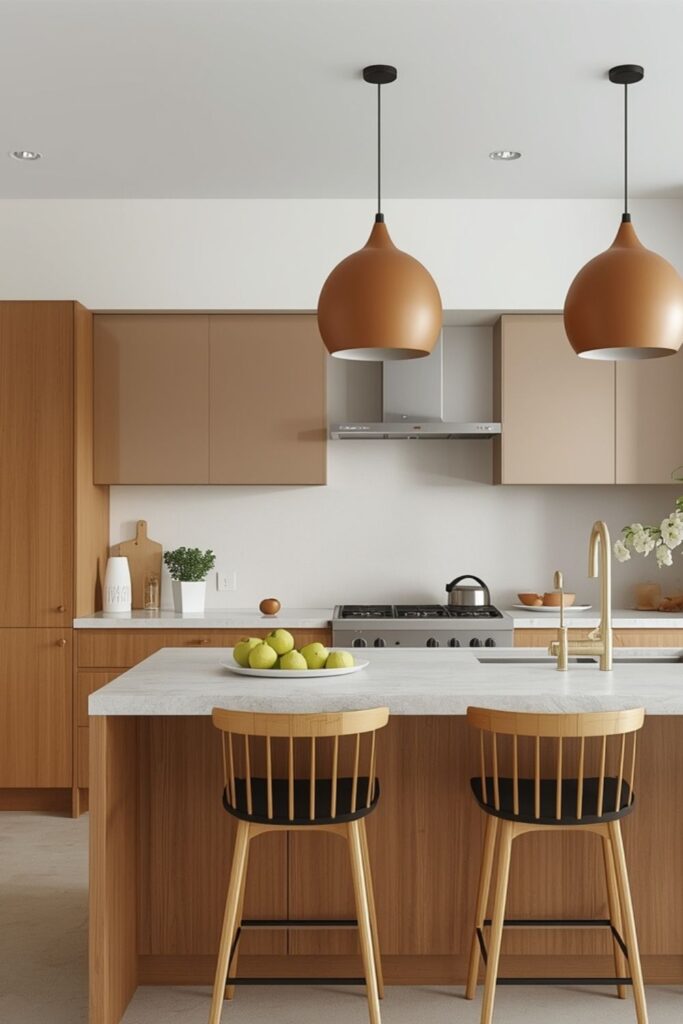
Soft minimal kitchens typically limit the palette to 2–3 closely related tones. For example:
- Warm white walls
- Light wood cabinets
- Soft beige countertops
This flowing palette helps the eye move smoothly across the space, reducing mental clutter.
8. Simple Layouts That Support Daily Movement
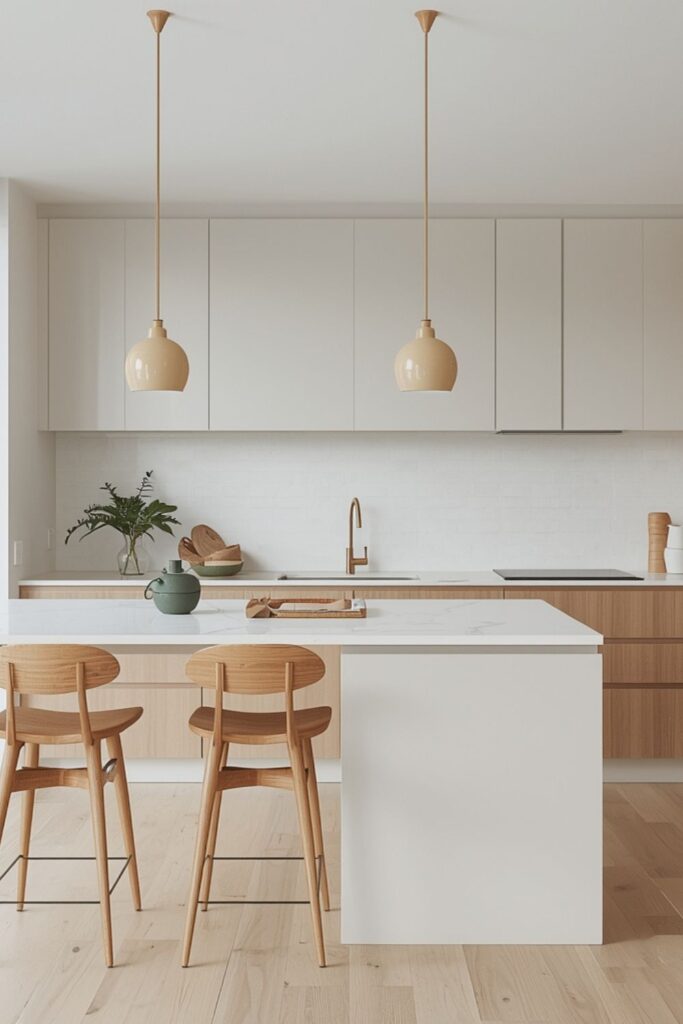
Soft minimalism values layouts that feel intuitive:
- Straight-line kitchens for compact homes
- L-shaped kitchens for better work flow
- Clear zones for cooking, washing, and storage
Complicated layouts or excessive islands are avoided unless space genuinely allows them.
9. Open Shelving Used With Intention
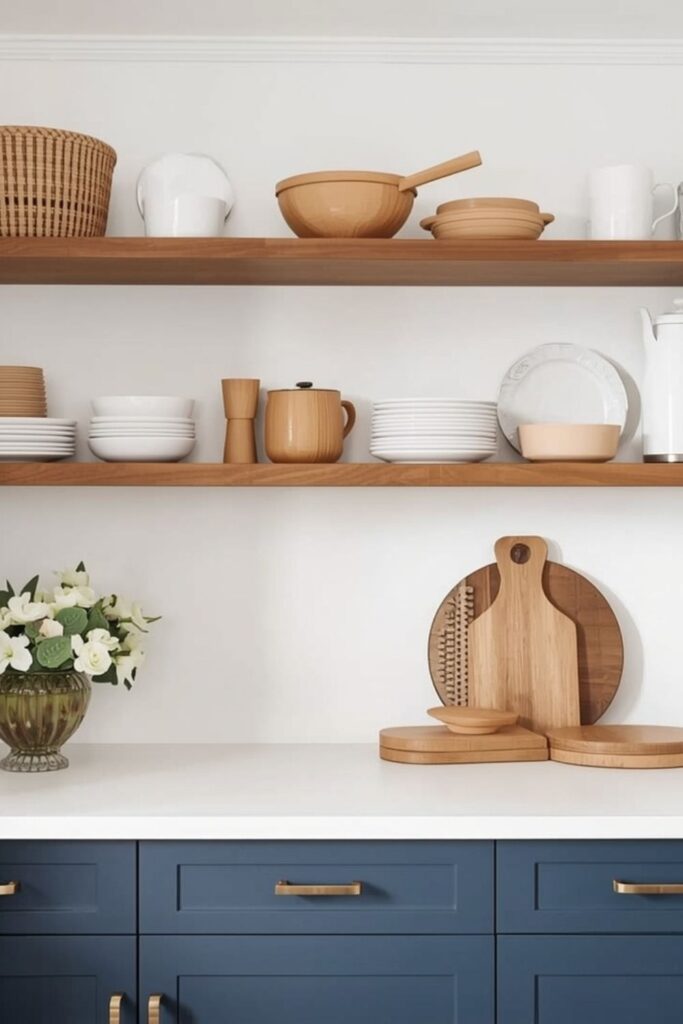
Open shelves are used sparingly—usually one or two shelves styled with:
- Everyday dishes
- Neutral ceramics
- Functional items only
This prevents clutter while adding warmth and personality to the kitchen.
10. IKEA-Inspired Soft Minimal Kitchens for Real Homes
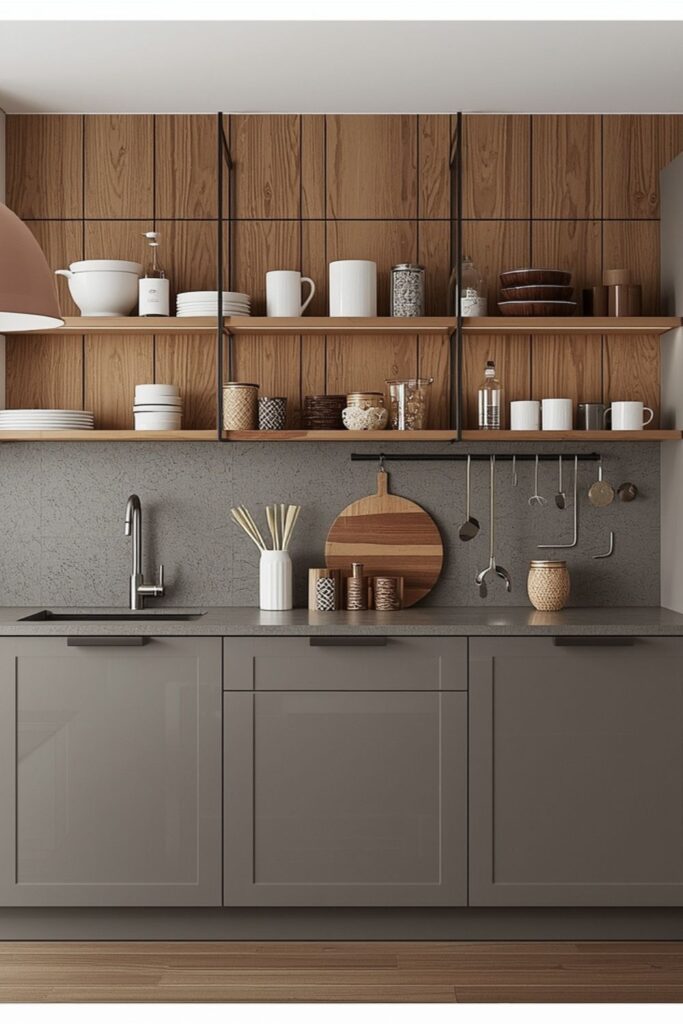
Many minimalist kitchen IKEA designs naturally follow soft minimalism:
- Modular storage
- Neutral color options
- Clean cabinet lines
These kitchens are affordable, flexible, and easy to adapt for small spaces—making them ideal for everyday households rather than showroom kitchens.
FAQs – Soft Minimalism in Modern Kitchen Design
1. What is soft minimalism in kitchen design?
Soft minimalism focuses on simplicity with warmth—using muted colors, natural materials, and gentle textures to create calm kitchens that feel livable.
2. Is soft minimalism suitable for small kitchens?
Yes. Soft minimalism is ideal for small kitchens because it reduces visual clutter and improves spatial flow.
3. Which colors work best for minimalist kitchens?
Warm whites, greige, beige, muted wood tones, and soft stone shades work best.
4. Can minimalist kitchens still feel warm?
Absolutely. Warm lighting, natural textures, and soft finishes prevent minimalist kitchens from feeling cold.
5. Are IKEA kitchens good for soft minimalism?
Yes. IKEA’s modular systems and neutral finishes align naturally with soft minimal kitchen design.
Conclusion: Why Soft Minimalism Is a Smarter Way to Design Modern Kitchens
Soft minimalism in modern kitchen design is not about following trends or creating picture-perfect interiors. It is about designing a kitchen that feels easy to live with—day after day, year after year. By focusing on warm neutrals, gentle textures, practical layouts, and reduced visual noise, soft minimalism supports both mental calm and daily efficiency.
Unlike strict minimalist kitchens that can feel cold or overly controlled, soft minimal kitchens allow space for real life. They accommodate movement, routines, and imperfections without feeling cluttered or overwhelming. This makes them especially suitable for busy households, small homes, and modern lifestyles where the kitchen serves multiple purposes beyond cooking.
As homes become more compact and daily life more demanding, kitchens that prioritize softness, simplicity, and longevity will continue to age better than trend-driven designs. Soft minimalism offers a balanced approach—modern yet warm, minimal yet human—making it one of the most sustainable design philosophies for contemporary kitchens moving forward.
Also Read: 8 Modern Kitchen Layout Ideas for Small Homes and Apartments